
Boise homeowners are great at thinking ahead. You see it in the way people invest in their yards, upgrade their kitchens before entertaining season, and choose finishes that will still look right ten years from now. Bathrooms deserve that same long-view thinking—especially if you want to stay in your home comfortably as life changes.
An aging-in-place bathroom remodel isn’t about turning your home into a clinic. Done well, it looks like a high-end renovation that just happens to be safer, easier to use, and better designed. Wider clearances, a shower you can step into confidently, lighting that actually helps you see—these are upgrades that benefit everyone, at every age.
At Renaissance Remodeling, we help Boise-area homeowners create accessible bathroom designs that feel polished and intentional.
Why Boise Homeowners Are Prioritizing Aging-in-Place Bathroom Remodels
The “right time” to remodel is before it becomes urgent
Most accessibility renovations happen in a hurry—after a fall, after surgery, or when stairs and slippery surfaces suddenly feel risky. That’s when homeowners are forced into quick decisions, limited product options, and a schedule that’s more stressful than it needs to be.
Planning an accessible bathroom remodel earlier gives you control. You can select finishes you genuinely love, think through layout changes carefully, and build in subtle safety improvements that don’t scream “accessible.” The end result feels like a luxury bathroom remodel that’s also future-ready.
Boise lifestyles and home styles that influence bathroom design
Boise homes have character, but bathrooms can be a mixed bag. In older neighborhoods like the North End, bathrooms may be smaller with dated plumbing and tight door swings. In ranch-style homes across the Treasure Valley, bathrooms often have workable footprints but may rely on tubs and standard-height fixtures that aren’t ideal long term. In newer builds, we commonly see sleek finishes paired with design choices that look great—but aren’t always practical if mobility becomes a concern (high curbs, slippery floors, minimal lighting).
A good aging-in-place plan respects the home’s architecture while modernizing it for real-life use.
Universal design vs. “medical-looking” bathrooms
Universal design means designing spaces that work for a wide range of people—without broadcasting that it’s for accessibility. The most successful accessible bathroom remodels include details like:
- A curbless shower that feels spa-like, not clinical
- Beautifully integrated grab bars that match the fixtures
- Smart storage at reachable heights
- Lighting that’s flattering and functional
When these choices are integrated from the start, the bathroom looks intentional—because it is.
How to Assess Your Bathroom for Accessibility
A great accessible bathroom design starts with an honest look at what’s currently difficult—or likely to become difficult. The goal is to remove “daily friction.” If you’ve ever felt unsteady stepping over a tub wall or found yourself wishing for better lighting first thing in the morning, you already know where to start.
Common problem spots: entry, shower/tub, toilet area, vanity, lighting
Most accessibility issues show up in five zones:
- Entry: narrow doors, tight swings, or raised thresholds
- Bathing: tubs, high shower curbs, slippery floors, poorly placed controls
- Toilet area: limited space beside the toilet, low toilet height
- Vanity: storage that requires bending, lighting that casts shadows, hard-to-turn knobs
- General safety: slick surfaces, weak ventilation, and dim lighting
Measurements that matter: door width, turning space, step heights
You don’t need to memorize building codes to plan well, but a few measurements guide smart decisions:
- Doorway width: wider is generally better for comfort and future mobility support
- Clear space in front of fixtures: helps with balance and ease of movement
- Step-over heights: tubs and curbed showers can become daily obstacles
In many Boise homes, improving these measurements is less about making the bathroom bigger and more about rethinking the layout and door placement.
Planning for future mobility needs without overbuilding
Not every homeowner needs a fully wheelchair-accessible layout today. But it’s wise to design for “future flexibility.” We often recommend:
- Installing blocking in walls now so grab bars can be added later
- Choosing a shower that can accommodate a bench, even if you don’t need one today
- Selecting finishes and lighting that reduce risk for everyone
It’s a calm, practical way to plan—without turning your remodel into a worst-case scenario project.
Accessible Shower & Tub Options That Look Appealing
If there’s one place in the bathroom where accessibility upgrades pay off immediately, it’s the shower. Boise homeowners often tell us the shower is the first space that starts to feel less comfortable over time—slippery surfaces, stepping over a curb, or reaching for controls that aren’t where you need them.
Curbless (zero-threshold) showers for safer daily use
A curbless shower (also called a zero-threshold shower) is one of the best upgrades for aging in place. It eliminates that “step” that can lead to slips, and it creates a clean, modern look that works beautifully in both classic and contemporary Boise homes.
A well-built curbless shower requires thoughtful planning:
- Proper sloping to the drain (so water stays where it belongs)
- Waterproofing done correctly—this is not a shortcut area
- A drain style that fits the design (linear drains can be sleek and efficient)
When we design these, we aim for a shower that looks architectural—simple lines, great tilework, and details that feel custom.
Walk-in showers with benches and handheld showerheads
A walk-in shower becomes more comfortable and safer when a few features are designed in from the beginning:
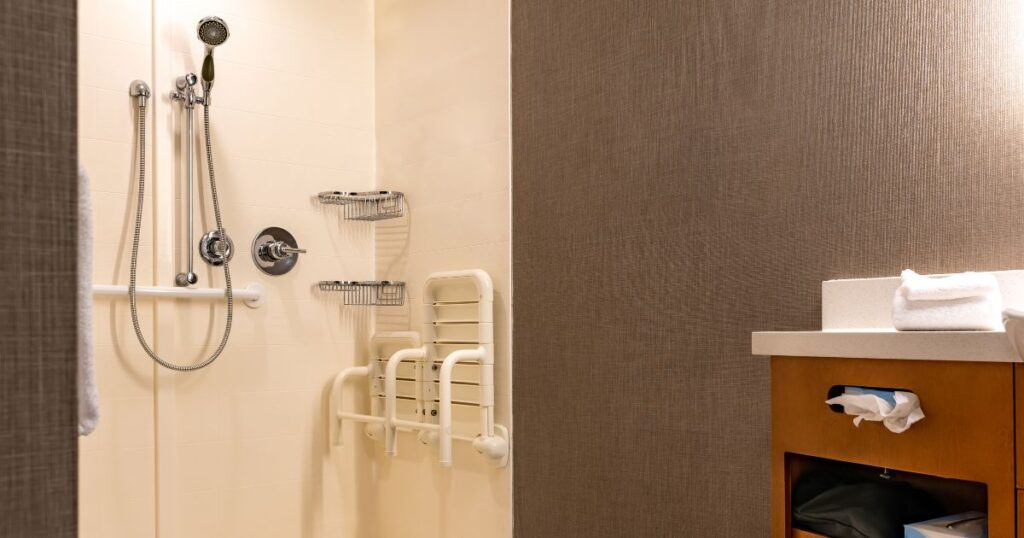
- A built-in bench (or a fold-down seat if space is tight)
- A handheld showerhead plus a fixed head for flexibility
- Controls placed where you can reach them before stepping fully into the shower
- A niche or shelf at a reachable height for shampoo and soap
In Boise, where people are outdoorsy and active, the ability to rinse off comfortably after hiking, skiing, or yardwork is a real quality-of-life upgrade.
Tub-to-shower conversions
For many homeowners, a tub-to-shower conversion is the most practical accessibility remodel move—especially in secondary bathrooms that don’t truly need a tub. Removing the tub can also open up layout options, making room for better storage or a more comfortable toilet area.
That said, if this is your only tub and you plan to resell in the near future, we’ll talk through your neighborhood expectations and your household needs before making the call. The best remodeling decisions fit your life first.
Slip-resistant tile and drainage that actually works
Accessibility doesn’t work if the floor is slick. The best non-slip solutions still feel refined:
- Porcelain tile with a slip-resistant finish
- Smaller-format tiles (more grout lines can improve traction)
- A curated grout color that complements the design and hides daily wear
- Thoughtful drainage so you’re not dealing with puddling
This is where quality craftsmanship really shows. A beautiful shower is one thing. A beautiful shower that drains perfectly and stays watertight for decades is the standard we build to.
Toilet Upgrades That Improve Comfort and Safety
Toilet changes aren’t the “fun” part of a remodel—until you live with them. The right toilet height, spacing, and support planning can make the bathroom noticeably easier day to day.
Comfort-height toilets and proper clearances
A comfort-height toilet sits a bit higher than a standard toilet, which can reduce strain on knees and hips. Pair that with smart clearances around the toilet and you get a setup that feels more comfortable now and more supportive later.
When space is tight (common in older Boise homes), we look at layout adjustments—sometimes shifting the toilet location a few inches makes a big difference in usability.
Bidet seats and hygiene upgrades for independence
Bidet seats have moved firmly into the “smart comfort” category. For aging in place, they can be genuinely helpful for independence and hygiene. Many models offer:
- Warm water
- Heated seats
- Night lights
- Simple controls
It’s a small change that can make daily routines easier—and it fits naturally in a high-end bathroom remodel.
Blocking and placement for future grab bars
Even if you don’t want grab bars right now, this is one of the smartest “plan ahead” steps: add blocking inside the walls during the remodel so grab bars can be installed later exactly where they’re needed.
It costs very little during construction and saves major headaches later.
Vanity & Sink Design for Easier Daily Routines
Vanities are often designed for looks first—and function second. In an accessible bathroom remodel, we design the vanity area as a daily work zone: comfortable, well-lit, and easy to use without bending, stretching, or fighting the hardware.
Right-height vanities (and why “standard” isn’t always ideal)
Standard vanity height doesn’t work perfectly for every body. Depending on your needs, we can adjust the vanity height for comfort and consider knee clearance options where appropriate. The goal is a vanity that feels natural to use—especially for tasks like shaving, skincare, and contact lenses.
Wall-mounted vs. furniture-style vanities: pros and cons
Both can work beautifully:
- Wall-mounted vanities can make floors feel more open and improve ease of movement
- Furniture-style vanities add warmth and character—great in Boise craftsman or transitional designs
We’ll recommend the best fit based on your layout and the look you want.
Lever handles, touchless faucets, and anti-scald protection
Accessibility often comes down to small daily interactions:
- Lever handles are easier than knobs, especially with arthritis
- Touchless faucets reduce mess and improve convenience
- Anti-scald valves protect against temperature swings—great for safety and peace of mind
These are the kinds of upgrades that feel “quietly luxurious” when they’re chosen well.
Mirrors, storage, and outlets placed where you need them
Good storage reduces bending and reaching:
- Drawers instead of deep cabinets
- Pull-out organizers
- Medicine cabinets that add storage without adding clutter
We also like to plan outlets intentionally—inside drawers for hair tools, at usable heights, and with a layout that matches how you actually get ready.
Lighting, Flooring, and Ventilation
The most “invisible” choices often make the biggest impact. Lighting, flooring, and ventilation can turn a bathroom from frustrating to effortless—while also protecting your investment.
Layered lighting to reduce shadows and improve visibility
A single overhead light creates shadows. Better lighting design includes:
- Vanity lighting that evenly lights the face
- Soft overhead ambient light
- A shower-rated recessed light for bathing areas
- Optional night lighting for safe nighttime trips
It’s practical, and it also makes the bathroom look more polished.
Non-slip flooring that still feels like a spa
For accessible bathroom flooring, we look for:
- Slip resistance
- Easy maintenance
- A finish that fits the style of your home
In Boise homes, we often use porcelain tile that mimics stone or wood—warm, timeless, and resilient.
Radiant heat floors
Boise winters are real. Radiant heat floors are one of those upgrades that homeowners don’t regret—especially in bathrooms. Warm floors reduce that cold shock in the morning, help the space feel more comfortable, and can support quicker drying in wet areas.
Ventilation strategies to protect finishes and indoor air quality
Ventilation protects your tile, paint, cabinetry, and overall comfort. We typically recommend a properly sized, quiet fan and placement that actually clears moisture—especially important if you’re investing in premium finishes.
Doorways, Layout, and Space Planning
Layout is where accessibility becomes effortless. If the bathroom feels tight, no fixture upgrade will fully solve it without addressing how you move through the space.
Widening doorways and improving transitions
Wider doorways improve access for walkers, future mobility support, and even simple tasks like carrying laundry. We also pay attention to flooring transitions—reducing thresholds and trip points wherever possible.
Pocket doors vs. swing doors
In many Boise bathrooms, a pocket door can be a smart solution because it eliminates door-swing conflicts and makes entry easier. It’s not right for every wall (plumbing and structure matter), but when it works, it’s a clean, space-saving upgrade.
Creating turning space without making the bathroom feel oversized
You don’t need a massive bathroom for it to work well. Often we can improve movement by:
- Repositioning the vanity
- Choosing a better shower footprint
- Simplifying door placement
- Using wall-mounted or space-efficient fixtures thoughtfully
The result is a bathroom that feels calmer—like it was designed with intention, not squeezed into place.
Grab Bars, Support, and Safety Features That Don’t Look Institutional
This is where design matters most. The right support features can look like part of a luxury bathroom—because today’s products are made to be beautiful.
Modern grab bar finishes and placement strategies
Grab bars now come in finishes that match your fixtures (matte black, brushed nickel, champagne bronze, and more). Placement matters too: the best grab bars are positioned for real use, not just “somewhere on the wall.”
We design these to blend into the space—aligned with tile lines, coordinated with hardware, and installed into proper blocking.
Built-in niches, shelves, and reachable storage
Reachable storage reduces strain and improves safety. We like:
- Shower niches at usable heights
- Corner shelves that keep products off the floor
- Storage zones that don’t require bending
Shower seating that blends into the design
A built-in bench can look like a feature, not an accommodation—especially when we choose a contrasting slab top or a beautifully detailed tile design. Fold-down seats are also a great choice when space is limited.
Boise-Specific Remodeling Considerations
Permits and professional planning
Depending on what you’re changing—plumbing locations, electrical, ventilation, structural adjustments—permits may be required. A professional design-build team keeps this organized and transparent so you’re not guessing what’s needed.
Older plumbing/electrical realities in Boise neighborhoods
In many established Boise neighborhoods, we uncover:
- Older plumbing that benefits from proactive replacement
- Electrical layouts that need updates for modern lighting and outlets
- Subfloor issues from historic moisture exposure
These aren’t reasons to worry; they’re reasons to work with a team that plans well and communicates clearly.
Choosing materials that hold up to Boise’s seasons and hard water
Boise’s climate swings and mineral-heavy water can influence product choices. We often steer clients toward durable finishes, easy-to-clean surfaces, and fixtures known for long-term reliability. When your bathroom is designed to be accessible, it should also be designed to stay looking great with everyday use.
What the Remodeling Process Looks Like With Renaissance Remodeling
Design-first planning, transparent budgets, and schedule clarity
A successful bathroom remodel for aging in place starts with design—not demolition. We talk through how you live, what you want now, and what you’d like the space to support later. From there, we develop a clear plan that aligns layout, selections, and budget.
Minimizing disruption in a lived-in home
Bathroom remodels affect daily routines. We plan carefully, keep job sites tidy, and communicate timelines so you’re not left guessing what’s happening next. A remodel can be disruptive by nature—but it doesn’t need to feel chaotic.
Quality craftsmanship details that matter long after the remodel
Accessibility features only work if they’re installed correctly—especially waterproofing, tile slopes, grab bar anchoring, and flooring transitions. Our focus is long-term performance with a finished look that feels refined and intentional.
An accessible bathroom remodel is one of the best ways to invest in long-term comfort and independence—without giving up the kind of design you’re proud to show off. The right choices can make your day easier now and make your home more livable for years to come.
If you’re thinking about a bathroom remodel for aging in place in Boise, Renaissance Remodeling would be glad to help you plan it thoughtfully—layout, materials, and details that feel elevated, practical, and built to last.