
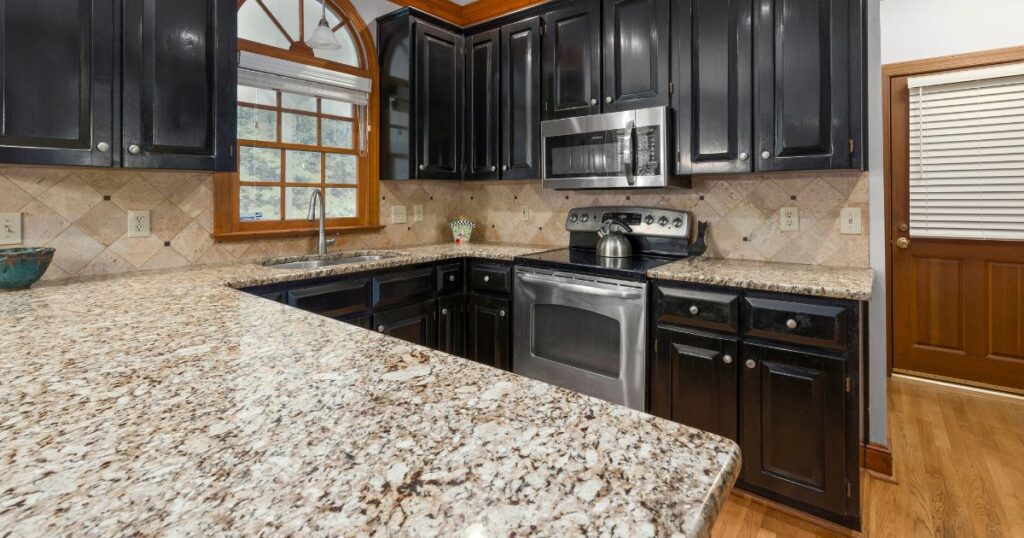
Your countertops take up a lot of visual space in your kitchen or bathroom, so when they start looking outdated, the entire room can feel that way, too. Painting them might seem like an easy way to refresh the space without committing to a full renovation.
And while countertop paint can make a noticeable difference, choosing the right product matters more than you might think. At Renaissance Remodeling, we believe even smaller home improvements deserve thoughtful planning, so let’s explore what makes a good countertop paint and when another solution might be worth considering.
How to Choose the Right Paint for Countertops
The best paint for countertops is a coating specifically designed for countertop surfaces, compatible with your existing material, and durable enough to handle your kitchen or bathroom’s daily activities. Look for products that offer strong adhesion, moisture resistance, and a protective finish rather than relying on ordinary interior wall paint.
The right choice also depends on how you use the space. A bathroom vanity that holds a few everyday essentials experiences different wear than a kitchen countertop where meals are prepared several times a day. Understanding those differences will help you choose a finish that looks attractive and holds up to regular use.
Consider Your Existing Countertop Material
Before shopping for countertop paint, identify what your countertops are made of. Different materials require different preparation methods, and not every coating will adhere properly to every surface.
For example:
- Laminate countertops: Often good candidates for countertop-specific paint because their existing surfaces can be refinished with compatible coating systems.
- Tile countertops: Some coatings work on tile, but grout lines may remain visible and can affect the finished appearance.
- Wood countertops: Certain products can be applied to properly prepared wood, although refinishing the natural wood may be a better choice.
- Granite, quartz, and marble: These surfaces require extra consideration. Many countertop paints are not approved for them, and covering an otherwise attractive stone surface may not be the best investment.
If your existing countertop has peeling laminate, water damage, or a swollen substrate, paint won’t correct the underlying problem. Addressing those issues first is essential to getting a result that lasts.
Look for Durability and Moisture Resistance
A beautiful paint color won’t mean much if the finish begins peeling around the sink or scratching after a few months. That’s why durability should be one of your biggest considerations.
Choose a countertop coating designed to withstand routine cleaning, occasional spills, and everyday household use. Pay special attention to the manufacturer’s recommendations for moisture exposure, heat resistance, and protective topcoats.
Keep in mind that even durable countertop paint has limitations. Many painted finishes still require trivets for hot cookware, cutting boards for food preparation, and prompt cleanup of standing water.
What Type of Paint Is Best for Countertops?
There are several types of countertop paint and refinishing products available, but they aren’t interchangeable. Understanding how each works can help you avoid spending money on a finish that doesn’t fit your needs.
Acrylic Countertop Paint
Water-based acrylic countertop coatings are a practical option for certain kitchen and bathroom updates. Many are relatively low-odor, making them appealing for interior projects where homeowners want to minimize disruption.
They can provide a clean, updated appearance, particularly on laminate surfaces that are still in good condition. However, their durability depends on the entire coating system, including any required primer or protective topcoat.
For a bathroom vanity or lightly used countertop, an acrylic system may offer an attractive refresh without a major renovation.
Epoxy Countertop Coatings
Epoxy countertop systems are popular among homeowners who want a glossy, stone-inspired appearance. They’re often used to create finishes that resemble marble or other decorative surfaces.
These products typically involve applying a decorative base and finishing it with a compatible epoxy topcoat. Once properly cured, the coating creates a protective surface, although it can still be scratched or damaged by excessive heat.
Epoxy application also requires careful attention to mixing instructions, working time, and curing conditions. If your goal is a smooth, polished result, it’s important to understand that the finish takes more precision than simply rolling paint onto a countertop.
Countertop Refinishing Kits
For homeowners interested in painting existing countertops, a complete refinishing kit can simplify product selection.
These kits typically include coordinated coatings and may provide tools or instructions for creating granite, marble, or other decorative effects. Because the products are designed to work together, they eliminate some of the guesswork involved in selecting separate paints and sealers.
However, not every kit works on every countertop material. Read the compatibility instructions carefully, and don’t assume that a product designed for laminate will also work on natural stone or tile.
Choosing the Right Countertop Paint Color and Finish
Once you’ve identified a suitable paint system, the fun part begins: choosing a color that complements your home.
Countertops play a major role in tying together cabinetry, flooring, backsplashes, and fixtures. Even a relatively small color change can affect how spacious, bright, or cohesive a room feels.
Coordinate With Your Kitchen or Bathroom Design
In many Boise homes, especially those with warm wood cabinetry or natural finishes, softer countertop colors can create a welcoming, timeless appearance.
Some combinations worth considering include:
- Warm white or cream: Creates a fresh, inviting appearance alongside oak cabinets, natural wood accents, and traditional kitchen finishes.
- Soft gray or greige: Works well with white cabinetry, understated backsplashes, and transitional interiors.
- Charcoal or deep gray: Adds contrast to lighter cabinets and can complement contemporary kitchen designs.
- Subtle marble-inspired patterns: Introduce visual interest without overwhelming the room.
If you have a character-filled home in Boise’s North End, you may prefer a softer, more traditional color palette. In newer Treasure Valley homes with open-concept layouts, a clean neutral finish may help connect the kitchen with the surrounding living spaces.
Before making a final decision, evaluate color samples alongside your existing materials. A shade that looks perfect under bright store lighting may feel completely different in your kitchen during the evening.
Choose a Finish That Fits Your Lifestyle
Countertop paint comes in different finishes, depending on the coating system.
Satin finishes can provide a softer, understated appearance, while glossy finishes create more reflection and are often associated with decorative stone-look coatings.
The important thing is to select a finish that suits both your preferred design and your maintenance expectations. Glossy surfaces can make certain scratches and imperfections more noticeable, while textured or patterned finishes may help disguise small visual inconsistencies.
Rather than choosing based on appearance alone, compare the cleaning requirements and durability of each available finish.
What to Know Before Painting Your Countertops
One of the biggest misconceptions about countertop painting is that the process is as simple as applying a few coats of paint. In reality, the preparation and curing stages are just as important as selecting the right product.
Surface Preparation Matters
Countertops frequently collect grease, soap residue, cleaning products, and other substances that can interfere with paint adhesion.
Before applying any coating, the surface must be thoroughly cleaned and dried. Depending on the product and material, additional preparation may include removing old caulk, repairing minor defects, sanding, or applying a compatible primer.
Some modern countertop coating systems don’t require sanding or priming under normal conditions, while others do. Following the manufacturer’s specific directions and completing an adhesion test where recommended is more reliable than using a general painting method.
Drying, Curing, and Everyday Maintenance
Even after freshly painted countertops feel dry, the coating may not have reached its full strength.
Some countertop systems require several days to fully cure, while others may need up to two weeks before heavy appliances can be returned. This is an important consideration for busy Boise households that depend on their kitchens every day.
After curing, proper maintenance helps preserve the finish. Use gentle cleaners approved by the manufacturer, avoid abrasive scrubbing, and protect the surface from knives and hot cookware.
Also, confirm whether the selected coating is approved for incidental food contact. Not all countertop paints are intended for direct food preparation, so using cutting boards remains the safest practical approach.
READ: How to Paint Kitchen Countertops
Should You Paint or Replace Your Countertops?
Painting countertops can be a worthwhile improvement, but it isn’t necessarily the best long-term choice for every home.
If your countertops are structurally sound, you’re working within a limited budget, and you simply want a different appearance, painting can provide a temporary refresh. It may be particularly useful for a lightly used guest bathroom or a kitchen you’re planning to renovate more extensively in the future.
However, if your countertops are damaged, difficult to maintain, or no longer meet your household’s needs, replacing them may offer better long-term value.
For instance, a busy family kitchen needs surfaces that can handle frequent food preparation, spills, and daily cleaning. Investing in new quartz, granite, or other suitable countertop materials may provide the durability and design consistency that painted countertops cannot fully replicate.
Replacement also creates opportunities to improve the space beyond its appearance. You might choose a larger island, adjust your countertop layout, install an undermount sink, or introduce a backsplash that complements the cabinetry.
READ: Countertop Material Options: How to Choose What Fits Your Kitchen
Choosing paint for countertops starts with understanding your existing material, selecting a compatible coating system, and considering how much wear the finished surface will experience. A carefully planned paint project can refresh an outdated countertop, but it’s important to have realistic expectations about its durability and maintenance.
If you’re beginning to notice that your countertops are just one of several things you’d like to change, it may be worth exploring a larger kitchen or bathroom renovation instead. Thoughtful material selections, improved layouts, and quality craftsmanship can make an everyday space more beautiful and easier to use for years to come.
Ready to explore what’s possible for your home? Contact Renaissance Remodeling to schedule a consultation and start planning a space you’ll love living in.