
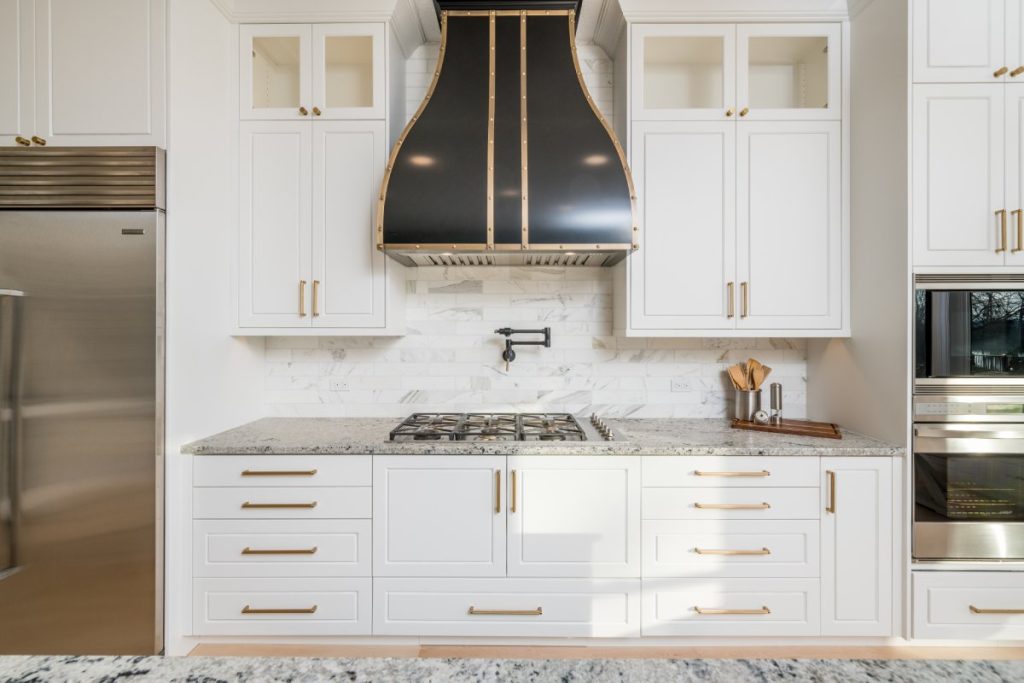
A lot of Boise kitchens still have the “builder-era” cabinet setup: not enough drawers, awkward corner storage, and upper cabinets that stop short of the ceiling and collect dust. Even in beautiful neighborhoods—whether you’re in a North End craftsman, a Bench ranch, or a newer home in Meridian—cabinets tend to be the first thing that makes a kitchen feel dated and less functional.
Replacing kitchen cabinets can be a simple refresh, or it can be the start of a full kitchen remodel. Either way, homeowners usually share the same questions:
- Can I replace kitchen cabinets myself and save money?
- What’s the real difference between DIY cabinet installation and hiring a pro?
- How do I avoid mistakes that mess up counters, floors, or appliance fit?
- What cabinet styles actually look right in Boise homes?
This guide breaks down the process step-by-step, with a clear comparison of DIY vs. hiring a professional cabinet installer in Boise. We’ll keep it practical, design-minded, and honest—exactly how we’d explain it if you were sitting with our team in a design meeting.
READ: How to Plan a Kitchen Remodel Step by Step
Here’s the direct answer: DIY cabinet replacement works best when the project is simple, the room is forgiving, and you have the time and tools to be extremely precise. Hiring a professional is usually the better choice when you want a high-end result, have an older home (common in Boise), or you’re coordinating counters, backsplash, flooring, plumbing, or electrical.
Cabinets don’t just “hang on the wall.” They set the alignment for your countertops, determine appliance spacing, and create the visual lines that make a kitchen look polished. If cabinets are even slightly off, it shows in every reveal and seam—especially with modern doors and tight hardware lines.
When DIY Cabinet Replacement Makes Sense
DIY can be a reasonable option if most of the following are true:
- You’re keeping the exact same layout (no moving sink, range, or fridge).
- You’re not replacing countertops or the counters are already removed and you’re prepared for templating after install.
- Your floors and walls are fairly level and square (newer construction tends to be more predictable).
- You have experience with precision carpentry—not just basic weekend projects.
- Your timeline is flexible. DIY often takes longer than expected, especially with troubleshooting.
A common DIY-friendly scenario: a smaller kitchen where you’re replacing cabinets with similar sizes and not changing plumbing or electrical. Think of it as “swap and improve,” not “rebuild.”
When Hiring a Professional Is the Smarter Investment
Hiring a professional cabinet installer—or a remodeling team—tends to be the better investment when:
- You’re upgrading to semi-custom or custom cabinetry and want it to look truly built-in.
- You’re replacing countertops (especially stone or quartz). Cabinet alignment is critical for templating.
- Your home is older (many Boise homes have out-of-level floors, out-of-plumb walls, and not-quite-standard framing).
- You want layout improvements like a wider pantry, better island storage, or moving appliances for flow.
- You care about the finish details: tight reveals, clean filler work, balanced crown, and consistent hardware alignment.
- You want the job done efficiently without living in a construction zone longer than necessary.
In Boise, we often see one specific issue: homeowners underestimate how much older floors slope and how much walls wave. Professionals plan for that with shimming strategies, scribing fillers, and leveling systems that keep everything looking intentional.
A Quick Cost, Time, and Risk Comparison
DIY cabinet installation can reduce labor costs, but it increases risk—and risk is expensive in kitchens.
- DIY savings: Mostly labor, sometimes a simpler cabinet line.
- DIY costs you don’t feel upfront: tool purchases, delivery damage, wrong sizes, filler reorders, and time off work.
- Pro value: design guidance, accurate ordering, clean installation, coordination with countertop templating and other trades, and accountability.
If your goal is a kitchen that looks “professionally finished,” cabinets are not the place to accept visible compromises. If your goal is “functional and improved,” and the project is straightforward, DIY may be a fit.
Step-by-Step: How Kitchen Cabinet Replacement Works
Even if you plan to hire a pro, understanding the process helps you make better decisions (and spot problems before they become delays). Here’s the cabinet replacement roadmap we use when planning a kitchen cabinet replacement in Boise.
Step 1: Decide What You’re Keeping (Layout, Counters, Floors, Appliances)
Before you pick door styles, clarify the scope:
- Are you keeping the same layout? A layout change can dramatically improve function, but it also affects plumbing, electrical, and venting.
- Are you keeping your countertops? If yes, cabinet sizes and placement must match exactly—or you’ll be forced into countertop replacement.
- What about flooring? If new flooring is planned, decide whether it runs under cabinets (often preferred) or stops at the toe kicks.
- Appliances: Confirm sizes early. Newer fridge depths, ranges, and built-in microwaves can change cabinet requirements.
Boise homeowners often want a more open, social kitchen—especially for game days, hosting, and family gatherings. Sometimes a small layout tweak (like a better island shape or moving a pantry) creates that openness without turning the project into a full gut remodel.
Step 2: Measure Like a Pro (and Avoid the Common Boise-Home Mistakes)
Measuring a kitchen isn’t just wall-to-wall. You’re measuring for reality:
- Wall lengths at multiple points (walls can bow)
- Ceiling heights at multiple points (ceilings can vary)
- Corner squareness
- Window and door casing depth
- Plumbing and electrical locations
- Floor level across the room
In older Boise neighborhoods, it’s normal to find a half-inch (or more) difference across a kitchen floor. A professional plan accounts for that so upper cabinets align, doors don’t swing weirdly, and countertops template correctly.
Step 3: Choose Cabinet Types (Stock vs. Semi-Custom vs. Custom)
Your cabinet selection affects budget, timeline, and the final look.
- Stock cabinets: Pre-set sizes and limited finishes. Fastest and often least expensive. Works best in standard layouts.
- Semi-custom cabinets: More sizing flexibility, more finish options, better storage accessories. A strong middle ground for many Boise kitchens.
- Custom cabinetry: Built to your exact space and design. Best for maximizing storage, achieving seamless built-ins, and matching high-end details.
For many Renaissance Remodeling clients, semi-custom cabinets hit the sweet spot: refined look, better function, and fewer compromises—without going fully custom unless the kitchen calls for it.
Step 4: Select Door Style and Finish That Fits Boise Homes
Cabinet style should match the home, not fight it.
- North End craftsman: Often looks best with warmer tones, thoughtful trim, and classic hardware.
- Bench and mid-century ranch: Clean lines, simple doors, and balanced contrast.
- Newer homes and foothills builds: Shaker remains popular, but the finish choice (wood tone, painted, or two-tone) makes it feel current.
Boise also gets strong sunlight, and Idaho winters are dry. We typically recommend durable finishes that handle seasonal changes well—especially around the sink and dishwasher where moisture and heat stress cabinets over time.
Step 5: Plan Storage Upgrades (Drawers, Pullouts, Trash, Pantry Solutions)
Cabinet replacement is the best time to fix the “daily annoyances.”
High-impact upgrades include:
- Deep drawer bases instead of lower-door cabinets
- Pullout trash and recycling
- Spice pullouts near the range
- Tray dividers for cutting boards and sheet pans
- Corner solutions that actually get used
- Pantry rollouts that prevent food from disappearing into the back
These choices make a bigger difference in daily life than most people expect. Better storage can make your kitchen feel larger without changing square footage.
Step 6: Order, Schedule, and Protect Your Timeline
Cabinets are a major lead-time item. A smooth project plan includes:
- Finalized cabinet drawings and appliance specs
- Verified finish selections
- Delivery inspection plan (catch damage immediately)
- Installation schedule coordinated with countertops, backsplash, and trades
If you’re hiring a pro, this is where a coordinated remodeling team shines. If you’re DIY, this is where projects often slow down—because one missed item can stop the entire kitchen.
DIY Cabinet Replacement: Tools, Skills, and Real-World Challenges
DIY installation looks straightforward online: remove old cabinets, hang new ones, add doors, done. In real kitchens—especially in Boise’s older housing stock—it’s rarely that simple.
What DIY Cabinet Installers Usually Underestimate
Here’s what tends to surprise homeowners:
- Walls aren’t flat. That means fillers need to be scribed, not just cut straight.
- Floors aren’t level. Base cabinets must be leveled as a system, not one box at a time.
- Stud locations don’t always cooperate. You may need careful reinforcement for uppers.
- One small mistake shows everywhere. Door alignment, reveal gaps, crown lines, countertop seams.
Cabinets create long visual lines. In a kitchen, your eye naturally tracks those lines—especially across uppers and along an island. “Almost level” becomes obvious fast.
Tools and Materials You’ll Need
At a minimum, a DIY cabinet install usually requires:
- Laser level (strongly recommended)
- Quality drill/driver and bits
- Stud finder (and confirmation methods)
- Cabinet screws appropriate for framing
- Shims (lots) and a plan for consistent spacing
- Clamps for joining cabinet boxes
- Saw for filler panels and trim work
- Scribing tools for walls that aren’t straight
- Safety gear and a protected work area
If you’re also doing trim, crown, or toe-kick work, the tool list grows quickly.
The “Older Boise Home” Reality: Walls, Floors, and Surprises
In Boise, we frequently see:
- Slight floor slope toward exterior walls
- Plaster or layered drywall that changes wall depth
- Past remodel patches that shift corner squareness
- Narrower openings than modern cabinetry expects
None of these are dealbreakers. They just require a plan. Pros build that plan into the install approach so the finished kitchen looks intentional rather than “fought into place.”
DIY Installation Checklist (High-Level)
If you’re determined to DIY, these are the non-negotiables:
- Verify layout and measurements before ordering
- Find the high point of the floor and start leveling from there
- Establish level lines for uppers and bases before hanging anything
- Install uppers first (safer access and better base alignment)
- Clamp and screw cabinet boxes together for a unified run
- Use scribed fillers at walls for a built-in look
- Confirm appliance clearances constantly (not just once)
DIY can work. It just needs patience, precision, and a willingness to redo steps until lines are right.
Hiring a Pro in Boise: What You’re Actually Paying For
When homeowners compare DIY cabinet installation to hiring a professional in Boise, the conversation often starts with labor cost. But the real value of a professional cabinet replacement is the combination of design expertise, ordering accuracy, and installation precision.
Design Guidance That Prevents Regret
Cabinet replacement decisions are hard to reverse. A design-minded team helps you avoid common missteps:
- Choosing a door style that clashes with your home’s architecture
- Selecting finishes that look great in a showroom but feel harsh in Boise’s natural light
- Missing storage opportunities that could have been built in
- Ending up with awkward filler gaps that make the kitchen look “off”
At Renaissance Remodeling, we treat cabinets as both a functional system and a design anchor. The goal isn’t just “new cabinets.” It’s a kitchen that feels cohesive, comfortable, and elevated.
Precision Installation (It’s Not Just Level and Screws)
Professional installation includes details that separate “installed” from “custom-finished”:
- Consistent reveals and door spacing
- Clean filler work that looks intentional
- Scribed panels where walls are uneven
- Correct support for heavy stone countertops
- Alignment that makes hardware lines crisp and symmetrical
Those details matter most when you choose modern styles, flat panels, or high-contrast finishes—because anything misaligned stands out.
Project Coordination (Counters, Backsplash, Flooring, Plumbing, Electrical)
Cabinets rarely exist in isolation. If you’re replacing countertops, adding a new backsplash, relocating a sink, or updating lighting, coordination is what protects your timeline and your finish quality.
A well-run kitchen cabinet replacement typically involves:
- Demo and site prep
- Cabinet installation
- Countertop templating after cabinets are set
- Countertop installation
- Plumbing reconnection
- Backsplash and finish work
When one step slips, the entire kitchen can stall. A professional remodeling team plans those steps so you’re not juggling schedules and surprises.
Warranty, Accountability, and Long-Term Value
Kitchens take daily wear. When cabinets are installed correctly, they:
- Hold alignment over time
- Support countertops properly
- Resist moisture damage around sinks and dishwashers
- Maintain smooth door and drawer function
Hiring a trusted Boise remodeling contractor gives you clear accountability and warranty coverage—especially important when cabinets are part of a bigger renovation investment.
Design Decisions That Make Cabinet Replacement Look High-End
Cabinets can be brand-new and still look “builder basic” if the design details aren’t considered. These are the upgrades that consistently make a Boise kitchen feel more custom and more refined.
Layout Tweaks That Add Function Without Moving Every Wall
Not every kitchen needs a full redesign to feel better. Strategic tweaks include:
- Widening a pantry run to reduce cluttered counters
- Reworking an island for seating and better traffic flow
- Swapping a standard base cabinet for deep drawer stacks near prep zones
- Creating a more intentional fridge surround so it feels built-in
In Boise, we see many kitchens where the layout technically works—but doesn’t support how families actually cook and gather. Small adjustments can make the kitchen feel calmer and more efficient.
Cabinet Height, Crown, and the “Finished” Look
One of the simplest ways to elevate a kitchen is to avoid the “dead space” above upper cabinets.
Options include:
- Taller uppers (often to the ceiling)
- A clean stacked-cabinet look in higher ceilings
- Thoughtful crown molding that matches the home’s style
For many Boise homes, ceiling-height uppers are a strong choice: more storage, cleaner lines, and a more intentional finish.
Hardware, Lighting, and Details That Modernize Without Feeling Trendy
Hardware and lighting are the jewelry of the kitchen, but the best results feel timeless.
High-impact choices:
- Simple, well-scaled pulls (not too small)
- Consistent finish choices across faucet, lighting, and hardware
- Under-cabinet lighting for function and warmth
- Interior drawer organizers that keep daily tools accessible
A kitchen that’s easy to live in always feels more high-end.
Choosing Durable Materials for Idaho’s Dry Winters and Sunny Summers
Boise’s climate swings matter. Dry winters and strong summer sun can be tough on low-quality finishes.
We generally recommend:
- Durable factory finishes (especially for painted cabinets)
- Quality drawer hardware with soft-close
- Materials and construction that reduce warping and wear over time
- Ventilation planning around ranges to manage heat and moisture
A beautiful kitchen should stay beautiful.
READ: How To Choose The Right Kitchen Cabinet
Budget Planning: What Cabinet Replacement Costs in Boise (and What Drives It)
Cabinet replacement budgets can vary widely, and it’s not always obvious why. Two kitchens with the same square footage can land in very different ranges based on cabinet type, layout, and finish level.
The Biggest Cost Variables
These factors drive most cabinet replacement costs:
- Cabinet line: stock vs. semi-custom vs. custom
- Door style and finish: painted finishes and specialty stains can change pricing
- Storage accessories: pullouts, trash solutions, and organizers add cost but improve function
- Layout changes: moving plumbing or electrical increases scope
- Countertops and backsplash: often tied to cabinet replacement decisions
- Installation complexity: uneven floors, uneven walls, and tight spaces take more time
In many Boise homes, the installation conditions (older framing, wavy walls) influence labor more than homeowners expect.
Where to Spend vs. Where to Save
If you want a kitchen that feels high quality every day, prioritize:
Spend:
- Cabinet construction and finish quality
- Drawer hardware (soft-close, full extension)
- Functional storage upgrades (trash pullout, drawer stacks)
- Professional installation if you’re doing stone countertops
Save (strategically):
- Fewer decorative add-ons if the layout and finish are strong
- A simpler door style that fits your home (Shaker done well looks premium)
- Focusing upgrades where you work most (sink, prep, cooking zones)
The best budgets aren’t about cutting corners. They’re about choosing where quality matters most.
How to Avoid Expensive Mid-Project Changes
The biggest budget blowups usually come from decisions made too late. Avoid that by:
- Confirming appliance specs before ordering cabinets
- Finalizing layout before selecting cabinet sizes
- Choosing hardware early (it affects drilling and alignment)
- Planning lighting and outlet locations before installation begins
- Deciding on countertop thickness and edge profiles early
When Renaissance Remodeling manages a cabinet replacement, we focus heavily on “decision timing” so your project stays predictable and enjoyable.
How Long Cabinet Replacement Takes
Kitchen cabinet replacement is a sequence of dependent steps. The timeline depends on cabinet lead times, project scope, and how many trades are involved.
Typical DIY Timeline
DIY timelines vary widely, but a realistic range is often:
- Demo and prep: several days (longer if surprises appear)
- Installation and leveling: multiple weekends or more
- Filler/trim/finish work: additional time depending on skill and tools
- Coordination for countertops: templating and install schedules can add weeks
DIY can work well, but it usually requires your kitchen to be partially out of commission longer.
Typical Pro Timeline (and Why It’s Often Faster Overall)
With a professional team, the active on-site work is often more efficient:
- Demo and prep completed quickly
- Cabinets installed and aligned for countertop templating
- Trades coordinated in a planned sequence
- Finish work completed with consistent detailing
The full timeline still depends on cabinet and countertop lead times, but the day-to-day disruption is often shorter and more predictable.
How to Keep Your Kitchen Functional During the Work
A few practical steps can reduce stress:
- Set up a temporary “kitchen station” (microwave, coffee, dishes) in a nearby room
- Plan easy meals that don’t rely on full cooking
- Protect floors and pathways
- Schedule work to minimize long gaps between steps
Good planning is the difference between “we lived through it” and “that was smoother than expected.”
Replacing kitchen cabinets is one of the most impactful ways to upgrade a kitchen—both in daily enjoyment and long-term value. DIY cabinet replacement can make sense for straightforward projects with flexible timelines and a strong skill set. Hiring a professional is often the better fit when you want a refined result, have an older Boise home with quirks, or you’re coordinating countertops and multiple trades.
If you’re weighing options, focus on this: cabinets set the tone for your entire kitchen. When the design is thoughtful and the installation is precise, everything else looks better.