
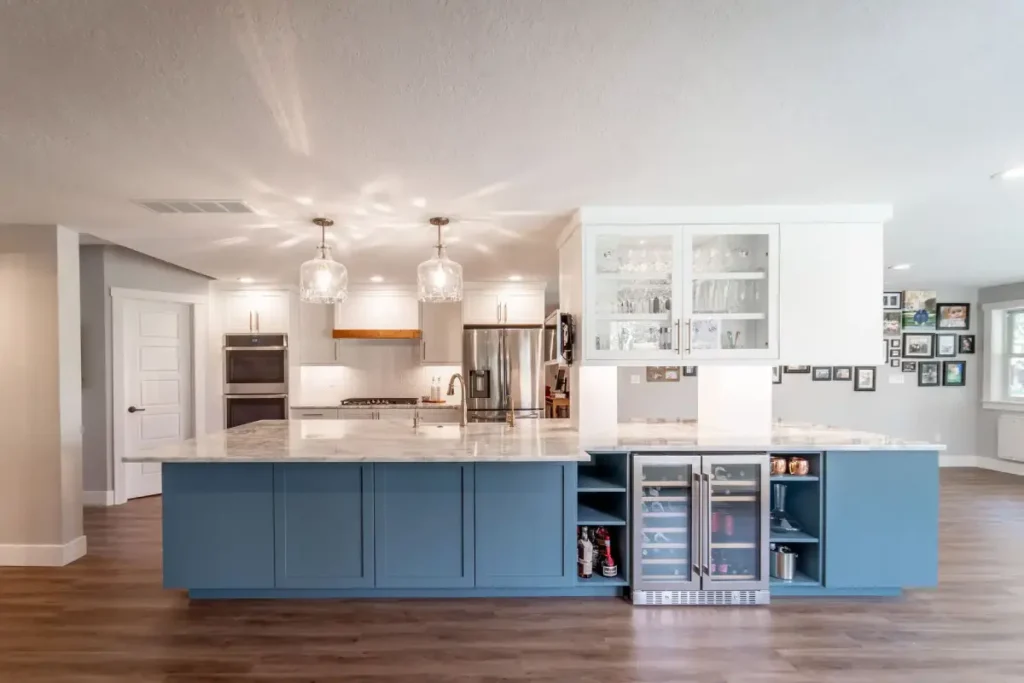
Your countertops are doing a lot of work. They anchor the look of your kitchen or bathroom, take the daily punishment of pots, cutting boards, cleaning products, and spills, and set the tone for how the whole space feels. So when they start looking tired — dull, chipped, stained, or simply dated — the instinct to want them gone is completely understandable.
But before you commit to a full countertop replacement, there is a question worth asking carefully: could painting them get the job done? Painted countertops have become a legitimate option in recent years, with specialty kits and professional-grade coatings making what once felt like a craft project into something more credible. At the same time, painting is not always the right answer — and choosing it when replacement would have been the wiser move can cost you more in the long run.
At Renaissance Remodeling, we have helped hundreds of Boise homeowners navigate exactly this kind of decision. We believe in being honest with our clients, even when that honesty means recommending the simpler, less expensive path. This guide walks you through both options with full transparency so you can make the choice that is right for your home, your budget, and your goals.
Paint or Replace? Here Is the Honest Answer
The short answer is this: paint when you are on a tight budget and the countertops are structurally sound; replace when you want lasting quality, a material upgrade, or a transformation that adds real resale value.
Painting countertops can work beautifully as a temporary fix or a budget-conscious refresh — particularly for rental properties, starter homes, or spaces you plan to renovate more thoroughly within the next few years. A quality paint job on laminate countertops, done correctly, can look sharp and hold up reasonably well for two to five years with proper care.
Replacement, by contrast, is a permanent investment. When you choose new quartz, quartzite, granite, or butcher block, you are not just changing the surface — you are upgrading the material quality, the durability, and often the resale appeal of your entire kitchen or bathroom. In a market like Boise, where home values have climbed steadily and buyers have become more discerning, quality countertops are a legitimate selling point.
The decision ultimately comes down to four factors: the condition of your existing countertops, the material they are made of, your budget and timeline, and how long you plan to stay in the home. We will walk through each of these in detail below.
Understanding the Condition of Your Current Countertops
What Painting Can Address
Painting is a surface treatment. It works best when the underlying countertop is in solid structural condition but simply looks worn or outdated. If your laminate countertops are discolored from age, stained in ways that cannot be cleaned out, or just the wrong color for the direction you are taking the room, paint is a reasonable option — provided the laminate itself is not delaminating, lifting at the edges, or bubbling in the field.
The same logic applies to tile countertops. Painted tile can look fresh and modern, and it is a popular choice for homeowners who want to neutralize busy grout lines or update an older color palette without the mess of a full tear-out. If the tiles are all intact and the grout is sound, painting can be an effective temporary refresh.
When the Damage Is Too Deep
There are conditions that painting simply cannot fix. Laminate that has begun to peel or delaminate will continue to fail beneath any paint coating you apply. Water damage that has compromised the particle board substrate will eventually telegraph through the surface. Deep gouges, cracks in stone or tile, and countertops where the edges have broken away are all conditions that call for replacement — not a cover-up.
One of the most common mistakes we see is homeowners painting over damage that is actually getting worse. The paint masks the problem for a while, but the underlying deterioration continues. By the time the paint fails, the substrate may be in far worse shape than it was when the painting project started — which means the eventual replacement costs more.
When in doubt, have a professional assess the substrate before committing to a painted finish. At Renaissance Remodeling, we offer free consultations to Boise homeowners so you can get an honest read before spending a dollar. Click here to schedule a consultation!
Which Countertop Materials Can Be Painted — and Which Should Not Be
Laminate: The Best Candidate for Painting
Laminate countertops — the kind found in millions of American kitchens and bathrooms built between the 1970s and early 2000s — are by far the most paint-friendly surface. With proper preparation, which means thorough cleaning, light sanding to rough up the surface, and a quality bonding primer, paint adheres well to laminate and can produce a surprisingly polished result. Many of the countertop refinishing kits on the market are designed specifically for laminate, and when applied correctly, they can mimic the look of stone or add a clean, solid-color finish that updates the whole room.
Boise has a significant stock of homes built during the 1980s and 1990s, many of them in the North End, Southeast Boise, and Meridian, where laminate countertops are still common. For homeowners in these homes who love their layout but want a fresher look on a modest budget, painting laminate is a legitimate approach worth exploring.
Tile: Paintable, But With Caveats
Tile countertops can be painted, but the long-term results are less predictable than with laminate. Grout lines are particularly vulnerable to peeling over time, especially in areas with heavy water exposure near the sink. If you paint tile, use an epoxy-based product designed for the purpose and expect to be more diligent about resealing and maintenance. In wet areas of a kitchen or bathroom, painting tile is a stopgap at best.
Stone, Quartz, and Solid Surface: Not Good Candidates
Natural stone — granite, marble, quartzite — and engineered quartz are not practical candidates for painting. These materials are dense, non-porous or very low-porosity surfaces, and paint adhesion is unreliable without extensive preparation. More importantly, if you have stone countertops, you almost certainly do not need to paint them. The value is in the material itself. If they are stained, professional stone restoration and polishing is a far better investment than covering them up. If they are cracked or broken, replacement is the right call.
Solid surface materials like Corian can technically be refinished, but this is specialized work best left to a professional who understands the material. DIY painting of solid surface countertops rarely ends well.
Concrete: Professional Refinishing Only
Concrete countertops, which became popular in custom Boise kitchens over the last decade or so, can be resealed and refinished professionally. This is a job for someone who specializes in concrete surfaces, not a standard painting contractor. The coatings involved are highly specific to the material and the application.
The Real Costs: Painting vs. Replacing Countertops in Boise
What You Will Spend on a Painted Finish
A DIY countertop painting kit from a home improvement store typically runs between fifty and one hundred fifty dollars, depending on the brand, the coverage, and whether you choose a solid color finish or a faux-stone effect. Add in primer, new rollers and brushes, painter’s tape, and a topcoat sealer, and a DIY project on an average kitchen island and perimeter counters might cost two hundred to four hundred dollars in materials.
If you hire a professional countertop refinishing company, expect to pay between four hundred and twelve hundred dollars for an average kitchen, depending on the size of the surface area and the complexity of the finish. Professional results are generally more consistent and durable than DIY, particularly for the topcoat application, which is where most amateur jobs fail.
Keep in mind that a painted finish will need to be touched up or redone within a few years, especially in high-traffic areas. The long-term cost of repeated painting projects can approach — and eventually exceed — the cost of replacement.
What You Will Spend on Replacement
Countertop replacement costs in the Boise market vary considerably depending on the material you choose. As a general reference, laminate replacement typically runs between fifteen and forty dollars per square foot installed. Quartz, which is currently one of the most popular materials we work with at Renaissance Remodeling, typically ranges from sixty to one hundred twenty dollars per square foot installed, depending on the slab, the edge profile, and the complexity of the cuts. Natural stone like granite or quartzite can range from sixty dollars to well over two hundred dollars per square foot for premium slabs.
For an average Boise kitchen with forty to sixty square feet of countertop surface, a mid-range quartz installation might run between twenty-four hundred and seven thousand dollars, including fabrication and installation. This is a meaningful investment — but one that adds durable, lasting value to your home.
A well-chosen countertop replacement in a Boise kitchen can return sixty to seventy cents on the dollar at resale, according to national remodeling value reports. Painting does not carry the same return.
How Long Do You Plan to Stay? The Timeline Question
One of the most honest questions we ask new clients is a simple one: how long are you planning to stay in this home? The answer shapes almost every recommendation we make.
If you bought a home in Boise in the last several years and are planning to stay for ten years or more, replacement almost always makes more sense than painting. You will live with the new countertops long enough to get full value from the investment, you will not have to repeat the painting project in three or four years, and you will enter the eventual sale of the home with a kitchen that is genuinely updated.
If you are planning to sell in the next one to two years, the calculus shifts. A freshly painted countertop can improve the appearance of your kitchen for listing photos and showings, and it costs relatively little. That said, a truly updated kitchen with new countertops and hardware will almost always outperform a painted one in competitive showings. Buyers in Boise are savvy — particularly buyers coming from the Bay Area or Seattle, who make up a meaningful portion of the market — and they can identify a painted countertop for what it is.
If you are a landlord with a rental property in the Treasure Valley and you are simply trying to refresh the space between tenants without a major capital expense, painting is a very reasonable choice. Rental kitchens take significant abuse, and spending four hundred dollars to refresh the countertops before a new tenant moves in makes far more sense than spending five thousand dollars on quartz.
Design Considerations: What Paint Can and Cannot Achieve
Where Painted Countertops Look Best
Painted countertops work best in rooms where the counter is not the visual focal point — laundry rooms, bathroom vanities in secondary bathrooms, mudroom utility areas, and wet bars where the surface is not heavily worked. They also tend to look most cohesive in casual, cottage-style, or farmhouse-inspired interiors, where a certain lived-in quality is part of the design intent.
In Boise and the surrounding Treasure Valley, a lot of newer construction leans toward clean, transitional, or contemporary design — open-plan kitchens with large islands, simple cabinetry, and an emphasis on natural materials. In these spaces, a painted countertop can feel like an obvious compromise, particularly on a large island where the surface reads prominently.
The Gap That Paint Cannot Close
No paint finish fully replicates the visual depth, tactile quality, or material presence of stone, quartz, or butcher block. The veining effects in faux-stone kits can look convincing in photos, but in person, most people can identify them as painted surfaces. If your goal is a kitchen that genuinely feels high quality, paint is a ceiling, not a destination.
Replacement also gives you access to design choices that paint simply cannot offer — custom edge profiles, waterfall edges on islands, integrated backsplashes, varying thicknesses, and the ability to coordinate your countertop slab with your tile, hardware, and cabinetry in a considered, cohesive way. This is where working with a design-minded remodeling partner becomes genuinely valuable.
Boise’s Design Climate
Boise is in a fascinating design moment right now. The influx of new residents from larger West Coast cities has accelerated the market’s taste for higher-end finishes. At the same time, the city retains a strong working-ranch and mountain-modern aesthetic that values materials that age gracefully and feel genuine. White quartz with subtle movement, honed quartzite in soft grays and taupes, warm butcher block on prep areas, and leathered granite on islands — these are the materials our clients are gravitating toward, and they are materials that painted countertops cannot convincingly stand in for.
A Practical Decision Framework: How to Choose
Paint May Be the Right Choice If
Consider painting your countertops if: the surface is structurally sound laminate with no delamination or water damage; your budget for this project is under one thousand dollars; you are preparing the home for rental or for a sale in the near term and want a low-cost visual refresh; or the space is a secondary bathroom, laundry room, or utility area where countertop quality is not a priority.
Replacement Is Likely the Better Choice If
Consider replacement if: the countertop material is cracked, damaged, delaminating, or compromised by water; you are remodeling the kitchen or bathroom more broadly and the countertops are part of the overall vision; you plan to stay in the home for five or more years; you are targeting resale value and want the kitchen to show at its best; or you have been living with countertops that frustrate you aesthetically every single day and you are ready to feel genuinely proud of the space.
The question is never really about paint versus stone. It is about what investment makes sense for where you are in your life, in your home, and in your budget — and being honest with yourself about the difference between a temporary fix and a real upgrade.
What the Process Looks Like: Painting vs. Replacing With Renaissance Remodeling
If You Decide to Paint
If you choose to go the painting route, we strongly recommend hiring a professional refinisher rather than attempting it yourself, at least for surfaces in high-visibility, high-traffic areas. The quality of the topcoat application is the single most important factor in how long a painted countertop holds up, and the professional-grade products available to contractors outperform the consumer kits meaningfully. Expect the process to take one to three days, including cure time, and plan to keep the surface dry and undisturbed for at least forty-eight hours after the final coat.
If You Decide to Replace
When you work with Renaissance Remodeling on a countertop replacement, here is what the process typically looks like. We begin with a design consultation where we discuss your goals, the overall direction of the space, and the materials that fit your budget and aesthetic. We then take you through our material selection process — often visiting our local stone and quartz suppliers here in the Boise area so you can see full slabs in person before making a decision. Digital samples and small swatches simply do not do justice to the natural variation in stone.
Once material is selected and templated, fabrication typically takes one to two weeks. Installation itself is usually completed in a single day for a standard kitchen, though more complex projects with integrated sinks, elaborate edge profiles, or large format slabs may take longer. Our team handles all removal of existing countertops, hauls away the old material, and ensures the installation is level, tight-fitting, and finished to a standard we would be proud to sign our name to.
We treat every project — whether it is a full kitchen transformation or a focused countertop replacement — with the same level of care and craft. That is what Renaissance means to us: not just a name, but a commitment to doing things beautifully and durably.
Maximizing the Value of a Countertop Replacement
Pair the Countertop With the Right Updates
If you are already investing in new countertops, there is almost always a set of smaller, complementary updates that can dramatically amplify the impact of the project. New hardware on existing cabinetry — pulls and knobs in brushed nickel, matte black, or unlacquered brass — can transform the feel of the room for a few hundred dollars. A new sink and faucet, swapped out during the countertop installation, adds plumbing updates while the old countertop is already off. Updated lighting over a kitchen island can change the entire atmosphere of the space.
At Renaissance Remodeling, we often talk about the idea of a phased remodel — doing the countertops and hardware this year, returning to the cabinetry and flooring in the next phase, and building toward a cohesive final vision over time rather than trying to do everything at once. This approach keeps projects financially manageable while steadily improving the quality and character of the home.
Consider the Backsplash Connection
Your countertop and backsplash work together more than almost any other pairing in a kitchen. If you are replacing the countertop, it is worth seriously considering whether the backsplash needs to change as well — or at minimum, whether the new countertop will still read well against the existing tile. Some combinations are timeless; others will create a visual tension that undermines the whole upgrade. Our design team can help you think through these pairings with a clear eye.
Working With a Partner Who Gives You an Honest Answer
We started this guide by saying that Renaissance Remodeling believes in giving honest advice even when that means recommending the simpler path. We mean that sincerely. Not every countertop situation calls for a full replacement. Sometimes painting is the smart, practical choice — and we will tell you so if that is the case for your home.
What we will always do is help you think through the decision clearly, without pressure, and with the full picture of what each option actually involves. Boise is our home. Our clients are our neighbors. Our reputation is built on the quality of what we leave behind when a project is complete — and that means we would rather steer you toward the right decision than the most expensive one.
If you are ready to talk through your countertop options — whether you are leaning toward painting, seriously considering replacement, or simply not sure where to start — we would love to connect. Reach out to the Renaissance Remodeling team for a free, no-pressure consultation, and let us help you make a decision you will feel good about for years to come.