
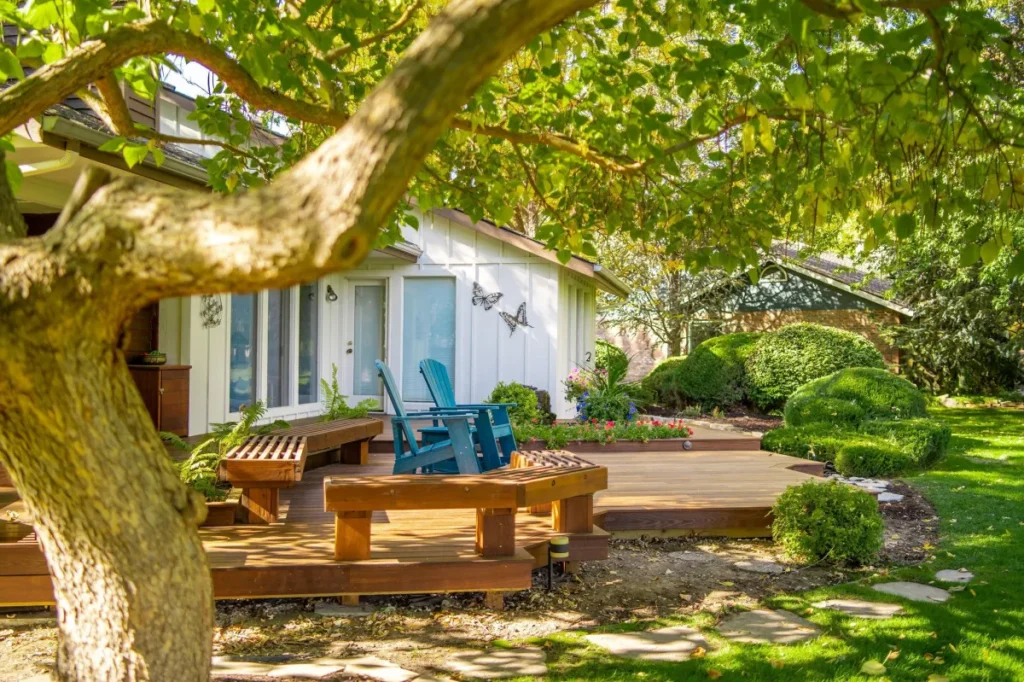
A well-designed deck can completely change the way you use your home. It can create a comfortable place for morning coffee, weekend dinners, summer gatherings, or quiet evenings outside. For Boise homeowners, a deck can also help make the most of long summer days while creating a smoother transition between the interior of the home and the backyard.
But the quality of the finished space depends heavily on the builder you choose.
A deck may look simple from the surface, but there is a great deal happening underneath it. Proper footings, framing, connections, flashing, drainage, stairs, railings, and material installation all affect how well the deck performs over time. At the same time, design decisions such as proportion, traffic flow, color, shade, and furniture placement determine how comfortable and intentional the finished space feels.
That is why choosing a deck builder should involve more than comparing a few estimates.
At Renaissance Remodeling, we believe successful home improvements begin with thoughtful planning, strong craftsmanship, and clear communication. The right contractor should help you understand your options, design around the way you live, and create an outdoor space that feels naturally connected to your Boise home.
This guide explains how to choose the right deck builder, what questions to ask, what warning signs to watch for, and how to compare contractors with confidence.
How Do You Choose the Right Deck Builder?
The right deck builder should have proven construction experience, strong design knowledge, proper licensing and insurance, a clear project process, and a portfolio that demonstrates consistent craftsmanship.
Just as importantly, the builder should take the time to understand how you want to use the space.
A good deck contractor does more than ask how many square feet you want. They should consider how the deck connects to the house, where people will walk, where furniture will sit, how much sun the space receives, where stairs should be positioned, and which materials make sense for your maintenance preferences and budget.
Price matters, but it should not be the only deciding factor.
When comparing deck builders in Boise, pay attention to the complete value of the proposal. A slightly higher estimate may include better framing practices, more durable materials, stronger project management, more detailed design work, or a more complete scope.
The best deck builder should feel like a partner in the project rather than simply someone hired to install deck boards.
Look for Proven Deck-Building Experience
Deck construction requires a specialized set of skills.
The visible decking is only one portion of the project. The structure beneath it must properly support the weight of the deck, furniture, people, railings, stairs, and any additional features incorporated into the design.
An experienced deck builder should understand:
- Footing placement
- Structural framing
- Beam and joist layout
- Ledger attachment
- Flashing
- Water management
- Stair construction
- Guardrail installation
- Fastener selection
- Material expansion and movement
- Exterior finishing details
General remodeling experience is valuable, but homeowners should still ask specifically about deck construction.
Ask to see completed outdoor projects and look for evidence that the contractor understands both structural performance and finished design.
Make Sure Design Is Part of the Process
A beautiful deck should look like it belongs with the home.
Its size, shape, materials, railing style, stairs, and colors should relate to the architecture rather than feeling like an unrelated platform attached to the back of the house.
A thoughtful deck builder should consider the entire setting.
For example, a modern Boise home may benefit from clean railing lines and simple material combinations. A Craftsman-inspired home may call for warmer finishes and details that reinforce the home’s existing character.
The builder should also think about how the deck will function.
Where will you place the dining table? Where does the grill go? Will people have enough room to walk behind chairs? Where should stairs lead into the yard? Is there a view worth preserving?
These questions may seem small during planning, but they have a major effect on how comfortable the deck feels once it is finished.
Prioritize Quality Over the Lowest Bid
Choosing the least expensive deck contractor can be tempting, particularly when multiple estimates appear to describe the same project.
Often, however, the proposals are not truly equal.
One contractor may include better framing materials, more detailed flashing, premium fasteners, stronger railing systems, or additional site preparation. Another may leave these details vague.
Before choosing based on price, make sure you understand what each estimate actually includes.
The goal should be to find the best long-term value, not simply the lowest construction number.
Start by Defining What You Want From Your Deck
Before interviewing deck contractors, spend some time thinking about what you actually want the finished space to accomplish.
You do not need to have every detail figured out. A good builder can help with that.
However, understanding your priorities will make conversations much more productive.
Think About How You Will Use the Space
Start with your everyday routine.
Do you imagine eating dinner outside during Boise summers? Hosting friends on weekends? Creating a grilling area? Adding a quiet place to read or drink coffee?
Some homeowners want a large entertaining deck. Others prefer a smaller space that feels intimate and easy to maintain.
Your deck may need to accommodate:
- Outdoor dining
- Lounge furniture
- A grill or outdoor kitchen
- A hot tub
- Children or pets
- Large gatherings
- Quiet relaxation
- Access to the yard
- Multiple activity zones
Once the purpose is clear, the design can begin responding to those needs.
Consider the Right Size and Layout
Bigger is not always better.
An oversized deck can feel disconnected from the house, while a deck that is too small can quickly become uncomfortable once furniture is added.
Instead of thinking only about square footage, think about usable zones.
A dining table needs room for chairs to pull out. A grill needs enough clearance to operate comfortably. Walkways should remain open even when guests are seated.
Stair placement also matters.
Well-positioned stairs can create a natural path into the yard. Poorly positioned stairs can interrupt furniture arrangements or create awkward traffic patterns.
A good deck builder should help balance these details before construction begins.
Think About the Deck as an Extension of Your Home
The best outdoor spaces feel connected to the interior.
That may mean aligning the deck with a kitchen or living area, coordinating materials with the home’s exterior, or positioning seating to take advantage of views from inside.
If your home already has strong architectural character, the deck should reinforce it.
The goal is not to make the deck disappear. It is to make it feel intentional.
Choose a Deck Builder Who Understands Boise Homes
Building a deck in Boise requires more than selecting attractive materials.
Local climate conditions, seasonal changes, property characteristics, and architectural styles should all influence the design.
Designing for Boise’s Climate
Boise experiences hot, sunny summers along with cold winter conditions and seasonal moisture.
Deck materials must be selected with those changing conditions in mind.
Direct sun can make some decking surfaces uncomfortable during the hottest parts of the day. Temperature changes can also affect how certain materials expand and contract.
Moisture management is equally important.
Water should be directed away from vulnerable connections, and flashing should be installed carefully where the deck attaches to the home.
A knowledgeable deck builder will consider these conditions from the beginning rather than treating them as an afterthought.
Designing for Boise-Area Architecture
Boise and the surrounding Treasure Valley include a wide variety of homes.
You will find established neighborhoods with traditional and Craftsman-style homes alongside contemporary properties and newer communities.
A deck should respond to that architecture.
Railing profiles, decking colors, trim details, stairs, and structural proportions all contribute to the final appearance.
A strong deck builder should be able to adapt the design rather than applying the same solution to every property.
Designing Around the Property
The shape and orientation of the lot matter just as much as the house.
A backyard with strong afternoon sun may benefit from shade planning. A sloped lot may create opportunities for an elevated deck or multi-level design.
Privacy may also influence railing placement, screening, or landscaping.
Other considerations include:
- Existing trees
- Neighboring homes
- Views
- Yard access
- Drainage
- Patios
- Landscaping
- Outdoor structures
- Sun direction
The best deck design responds to the actual property instead of forcing a predetermined layout onto it.
Review the Deck Builder’s Portfolio Carefully
A contractor’s portfolio can tell you a great deal about their design ability and construction quality.
However, do not look only at the most dramatic finished photos.
Look Beyond Attractive Photos
Pay attention to the smaller details.
Look closely at:
- Stair proportions
- Railing alignment
- Fascia
- Deck edges
- Board layout
- Transitions
- Connections to the house
- Lighting integration
- Finish consistency
Good craftsmanship usually shows up in the details.
A builder with consistently clean work across many different projects is more reassuring than one with only a few carefully selected images.
Look for Projects Similar to Your Home
If possible, find examples that resemble your property.
A contractor who has successfully completed decks on similar homes may already understand many of the design and construction challenges involved.
Look for similarities in:
- Home style
- Deck height
- Yard slope
- Deck size
- Material choices
- Railing systems
You do not need to copy another project, but comparable work can help demonstrate relevant experience.
Look for Design Variety
A strong portfolio should not look like the same deck repeated over and over.
Homeowners have different properties, routines, architectural styles, and preferences.
The finished projects should reflect that.
Design variety is often a sign that the builder listens to clients and develops solutions around individual homes rather than relying on one standard approach.
Ask About the Deck Design Process
Before hiring a deck contractor, ask how the project moves from the first conversation to final construction.
A clear planning process can prevent confusion later.
What Happens During the Initial Consultation?
The first consultation should involve more than taking measurements.
The builder should ask questions about:
- How you want to use the deck
- Your preferred style
- Your maintenance expectations
- Material preferences
- Your approximate budget
- Existing outdoor features
- Future plans for the yard
They should also inspect the property and consider how the deck will connect to the home.
This is where design begins.
How Are Materials and Finishes Selected?
Homeowners have more deck material choices than ever.
A good contractor should explain the advantages and tradeoffs clearly instead of simply recommending the most expensive option.
Selections may include:
- Decking material
- Board color
- Railing system
- Fascia
- Lighting
- Stair finishes
- Privacy features
- Shade structures
These choices should work together visually.
Decking may look attractive on its own, but the complete combination matters more.
How Are Changes Handled Before Construction?
Planning decisions are easier and less expensive to adjust before construction begins.
Ask how the builder finalizes layout, dimensions, materials, railings, stairs, and other details.
A clear design process can reduce last-minute decisions and minimize change orders during construction.
Understand Your Deck Material Options
Material selection affects appearance, maintenance, cost, and long-term performance.
There is no single best decking material for every homeowner.
The right option depends on your priorities.
Pressure-Treated Wood Decking
Pressure-treated lumber remains one of the more accessible deck-building materials.
It can provide a traditional wood appearance and can be stained in different colors.
However, wood requires ongoing maintenance.
Depending on exposure and finish, homeowners may need to clean, seal, or stain the deck periodically to maintain its appearance and protect the surface.
Cedar and Other Natural Wood Decking
Natural wood can create a warm, classic appearance that works well with many Boise homes.
Cedar is particularly appealing to homeowners who like natural color variation and texture.
Like other wood decking, however, it requires maintenance.
Without regular finishing, the surface will gradually weather and change color.
That is not necessarily a disadvantage. Some homeowners enjoy the natural aging process.
The important thing is understanding what to expect before choosing the material.
Composite Decking
Composite decking has become popular for homeowners who want reduced maintenance.
Many products are designed to resist common issues associated with natural wood while offering a wide range of colors and textures.
Composite decking generally has a higher initial material cost than basic treated lumber, but some homeowners find the lower maintenance requirements worthwhile.
Different composite products also perform differently, so brand, product line, color, surface temperature, and installation requirements should all be discussed with your builder.
Compare Materials Based on Long-Term Value
Do not evaluate deck materials based only on the initial price.
Consider:
- Maintenance
- Expected lifespan
- Appearance
- Comfort
- Cleaning
- Repairability
- Warranty
- Long-term cost
A thoughtful contractor should help you weigh these factors without pushing you toward a material that does not fit your priorities.
Ask How the Deck Will Be Built
Many of the most important parts of a deck will eventually be hidden.
That makes it important to ask questions before construction begins.
Footings and Structural Support
Every deck needs a stable foundation.
Footings transfer the weight of the structure into the ground.
Their size, depth, spacing, and placement must be appropriate for the deck design and site conditions.
A contractor should be able to explain how the structure will be supported and why the selected approach makes sense.
Framing and Connections
The framing system supports the visible decking above.
Joists, beams, posts, hardware, and connections all need to work together.
The connection between the deck and the house is particularly important.
Improper ledger installation can create both structural and moisture problems.
Ask your builder how these connections will be handled.
Water Management
Water is one of the biggest long-term threats to exterior structures.
Proper flashing helps protect areas where the deck connects to the home.
Water should also be able to drain away from framing rather than becoming trapped.
These details may never be noticeable once the deck is complete, but they can have a major effect on longevity.
Stairs and Railings
Stairs and railings must do more than look good.
They need to feel stable and comfortable.
Stair width, tread dimensions, railing height, post placement, and transitions all influence the experience of using the deck.
Good builders treat these elements as part of the overall design rather than adding them at the end.
Verify Licensing, Insurance, Permits, and Code Knowledge
Professional credentials are an important part of choosing a deck contractor.
Before signing a contract, make sure you understand who is responsible for construction, permits, and inspections.
Confirm the Builder Is Properly Licensed and Insured
Ask the contractor about licensing and insurance.
Professional builders should be comfortable discussing these details.
Insurance helps protect both the homeowner and the contractor if something goes wrong during construction.
Ask Who Handles Permits
Depending on the scope and design of the deck, permits or approvals may be required.
Ask who will determine what is needed and who will manage the process.
Permit responsibilities should be clear before work begins.
Look for Knowledge of Local Building Requirements
Deck builders should understand requirements related to structural support, stairs, guards, connections, and other safety considerations.
You do not need to become an expert on building codes yourself.
The contractor should know how to design and build the project properly.
Compare Deck Builder Estimates the Right Way
Homeowners often collect several estimates and compare the bottom-line numbers.
That can be useful, but only if the proposals include similar scopes.
Make Sure You Are Comparing the Same Scope
One estimate may include much more than another.
Compare items such as:
- Deck size
- Demolition
- Site preparation
- Framing materials
- Decking
- Railings
- Stairs
- Lighting
- Fascia
- Permits
- Cleanup
- Disposal
If one proposal is significantly less expensive, determine what may be missing.
Ask What Is Included and Excluded
A detailed proposal should clarify what the contractor is providing.
It should also identify major exclusions.
Clear expectations help prevent surprises after construction begins.
If part of the estimate is vague, ask for clarification before signing.
Be Cautious With Estimates That Are Significantly Lower
A lower estimate is not automatically a bad estimate.
However, a large price difference deserves investigation.
The builder may be using different materials, different structural methods, fewer design services, or a narrower project scope.
Understand why the price is lower before deciding that it represents better value.
Evaluate Communication Before You Hire
The quality of communication before construction often provides a preview of the experience you can expect later.
Pay attention to how the contractor handles your questions.
Pay Attention to the Consultation Experience
A good contractor should listen carefully.
They should ask questions about your priorities rather than immediately telling you what you should build.
They should also be able to explain recommendations in clear language.
You should leave the consultation feeling more informed, not more confused.
Ask Who Will Manage Your Project
Find out who will be your primary contact once construction begins.
Depending on the company, this may be the designer, project manager, superintendent, or another team member.
What matters most is knowing who you can contact when questions arise.
Ask How Updates Are Provided
Construction projects involve many moving parts.
Weather, inspections, materials, and site conditions can all affect scheduling.
A professional builder should have a clear process for communicating:
- Schedule updates
- Progress
- Material decisions
- Changes
- Unexpected conditions
Good communication does not mean that nothing unexpected will ever happen.
It means you will understand what is happening and how the team plans to address it.
Read Reviews and Ask for References
Reviews can provide helpful insight into the client experience.
Look beyond the star rating.
Look for Patterns in Reviews
Individual reviews can be subjective.
Patterns are more useful.
Pay attention to repeated comments about:
- Craftsmanship
- Communication
- Cleanliness
- Scheduling
- Problem-solving
- Professionalism
- Follow-through
If many homeowners mention the same strength, that is meaningful.
Repeated complaints deserve attention too.
Ask Past Clients About the Entire Process
If you speak with references, do not ask only whether they like the finished deck.
Ask about the project itself.
Useful questions include:
- Did the project match the original expectations?
- Was communication consistent?
- Were changes explained clearly?
- Did the crew respect the property?
- Were problems handled professionally?
- Would you hire the builder again?
The construction experience matters almost as much as the finished result.
Ask About Warranties and Long-Term Support
A deck should remain an asset to the home long after construction ends.
Ask what happens if a concern appears later.
Understand the Workmanship Warranty
Find out whether the builder provides a workmanship warranty.
Ask:
- What is covered?
- How long does coverage last?
- How are concerns reported?
- Who evaluates warranty issues?
The details should be explained clearly.
Understand Manufacturer Warranties
Some decking and railing products include manufacturer warranties.
Coverage can vary based on product type and installation requirements.
Your contractor should be able to explain which warranties apply to the materials being proposed.
Choose a Builder Who Will Be Available After Completion
Accountability matters.
A contractor who intends to maintain a long-term reputation in the community has a strong reason to stand behind their work.
That relationship should not disappear the moment final payment is made.
Questions to Ask a Deck Builder Before Hiring Them
A consultation is your opportunity to understand how the contractor works.
You do not need to ask every possible construction question, but a few thoughtful questions can reveal a great deal.
Questions About Experience
Consider asking:
- How long have you been building decks?
- Can I see projects similar to mine?
- Who will perform the construction?
- Do you regularly build with the materials I am considering?
- Have you completed decks on similar properties?
The answers should make you confident that the builder understands the type of project you are planning.
Questions About Design
Ask:
- How will you design the deck around my home?
- How do you determine the right deck size?
- Can you help choose decking, railings, and finishes?
- How do you plan furniture and traffic flow?
- How do you approach privacy, shade, and views?
A builder who treats design seriously should have thoughtful answers.
Questions About Construction
Ask:
- How will the deck be supported?
- How will it connect to the house?
- How do you manage flashing and drainage?
- Who handles permits and inspections?
- What framing materials will be used?
- How are stairs and railings planned?
You do not need technical explanations filled with jargon.
You simply want confidence that the contractor has considered these details.
Questions About the Project Experience
Ask:
- Who will be my main point of contact?
- How often will I receive updates?
- How are changes documented?
- How is the jobsite maintained?
- What happens if unexpected conditions are discovered?
The answers can help you understand what living through the project may actually feel like.
Red Flags to Watch for When Choosing a Deck Contractor
Most homeowners can tell when something feels off during the hiring process.
Do not ignore those concerns.
Vague or Incomplete Estimates
A proposal should provide enough information for you to understand what you are buying.
Be cautious if major items such as materials, railing systems, stairs, or structural work are unclear.
Vague estimates can make it difficult to compare contractors and may lead to unexpected costs.
Pressure to Make a Fast Decision
A professional contractor should give you reasonable time to review the proposal and ask questions.
High-pressure sales tactics can prevent homeowners from carefully evaluating the project.
Good remodeling decisions should feel informed, not rushed.
No Portfolio or Limited References
Established builders should be able to demonstrate their work.
A limited portfolio does not automatically mean poor quality, particularly for a newer company, but it does mean you should ask additional questions about experience.
Poor Communication Before the Project Starts
If calls regularly go unanswered during the sales process, communication may not improve once construction begins.
Notice how quickly questions are addressed and how clearly information is explained.
Responsiveness is part of the service you are hiring.
A Price That Seems Too Good to Be True
An unusually low price may have a reasonable explanation.
It may also indicate reduced scope, lower-cost materials, missing details, or unrealistic assumptions.
Ask questions until you understand the difference.
How Much Should Quality Influence Your Deck Builder Decision?
Quality should be one of the most important factors in your decision.
A deck is exposed to sun, moisture, temperature changes, daily foot traffic, and years of regular use.
Small shortcuts during construction can become larger problems later.
Think Beyond the Initial Construction Cost
The cheapest deck to build is not always the cheapest deck to own.
Maintenance, repairs, replacement, and premature material failure all affect long-term cost.
Investing more in durable materials or better construction may provide better value over time.
Quality Is Often Found in the Details You Cannot Immediately See
Homeowners naturally focus on the visible deck surface.
However, much of the construction quality is hidden underneath.
Important details include:
- Framing
- Flashing
- Fasteners
- Hardware
- Footings
- Connections
- Drainage
These components may not attract attention in photographs, but they are fundamental to the deck’s performance.
Invest Where It Has the Greatest Long-Term Impact
If your budget requires prioritization, protect the areas that are difficult to change later.
Structural quality should come first.
After that, prioritize durable materials and a thoughtful layout.
Decorative features can often be added later more easily than correcting poor framing or redesigning an awkward deck.
Why Design and Construction Should Work Together
Deck design should never be separated from the realities of construction.
A beautiful idea must also be practical, durable, and structurally sound.
Great Deck Design Must Be Buildable
Design decisions affect framing, material use, cost, and installation.
For example, changing the location of stairs may require changes to the structural layout.
Adding a hot tub may introduce additional support requirements.
A strong builder considers these relationships early.
Construction Decisions Affect Appearance
Technical details influence how polished the finished deck looks.
Board direction can change the visual proportions of the space. Fascia can conceal structural edges. Railing post placement affects sightlines.
Even stair alignment can influence the overall balance of the design.
Good craftsmanship and good design support each other.
A Unified Approach Creates a More Finished Result
The best results happen when the design and construction teams are working toward the same vision.
That approach reduces compromises and makes it easier to maintain consistency from the first sketch through the final details.
For homeowners, it also creates a more organized and collaborative experience.
Choosing the right deck builder means looking beyond price and evaluating the complete experience.
Look for proven construction experience, thoughtful design, strong craftsmanship, clear communication, detailed planning, and a willingness to understand how you want to use the space.
The right contractor should be able to explain not only what they plan to build, but why the design makes sense for your home.
For Boise homeowners, that means considering the architecture of the house, the shape of the property, the changing seasons, outdoor living habits, and the long-term performance of the materials.
At Renaissance Remodeling, we believe great remodeling comes from combining thoughtful design with careful construction. Every element should serve a purpose, and every decision should contribute to a finished space that feels natural to the home.
If you are considering a deck or a larger renovation that connects your indoor and outdoor spaces, start with a clear plan and a team that values collaboration, craftsmanship, and the details that make a home feel complete.