
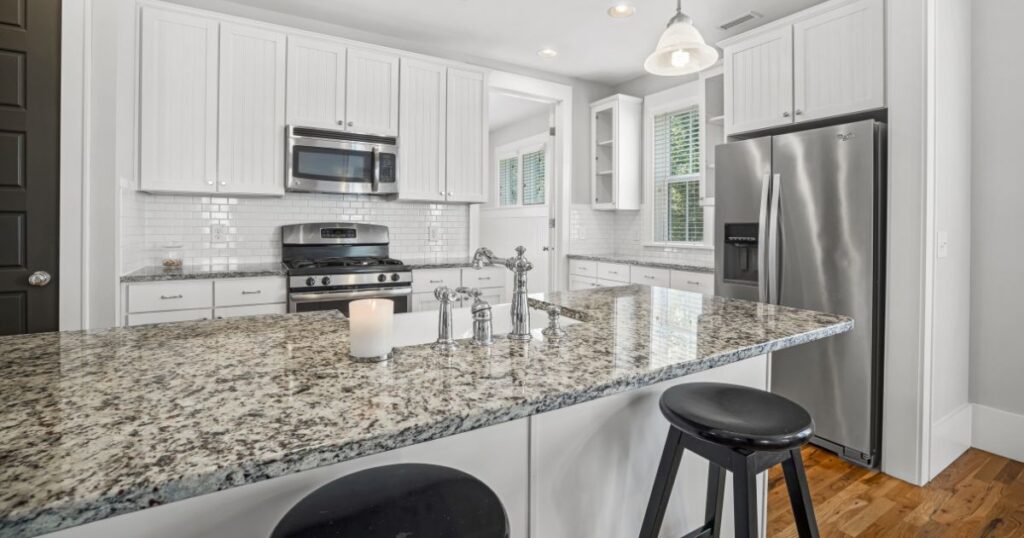
Kitchen countertops have an outsized influence on how a kitchen looks and feels. When they are scratched, dated, or simply the wrong color, they can make otherwise attractive cabinets and finishes feel older than they are.
Replacing countertops is often the most durable solution, but it is not the only option. Painting kitchen countertops can provide a noticeable visual update at a lower upfront cost. It can be especially useful for homeowners who need a temporary improvement, are preparing a property for sale, or want to refresh a lightly used kitchen before undertaking a larger renovation.
The success of the project depends heavily on preparation, product selection, and expectations. Countertops experience more wear than walls or furniture. They are exposed to water, cooking oils, dropped utensils, cleaning products, heat, and constant contact. A finish that looks beautiful on the first day still needs to hold up to the realities of daily life.
At Renaissance Remodeling, we encourage Boise homeowners to look at countertop painting as one option within a larger design conversation. Sometimes it is a practical short-term update. In other homes, replacement offers better performance, design flexibility, and long-term value.
This guide explains how to paint kitchen countertops, which surfaces are suitable, how to create a polished finish, and when a more permanent kitchen renovation may be the wiser investment.
How Do You Paint Kitchen Countertops?
Painting kitchen countertops generally involves deep cleaning, repairing damage, sanding the surface, applying a bonding primer, adding one or more decorative paint layers, and protecting everything with a countertop-rated topcoat. Each layer must dry and cure according to the product manufacturer’s instructions before the counter returns to normal use.
The simplified process looks like this:
- Identify the countertop material.
- Choose a compatible refinishing system.
- Remove grease, caulk, residue, and loose material.
- Repair chips or damaged seams.
- Sand the surface to improve adhesion.
- Apply a bonding primer.
- Build the desired color or decorative finish.
- Seal the countertop with a durable protective coating.
- Allow the complete finish to cure before using it.
The painting itself is rarely the most difficult part. Surface preparation and curing are what determine how well the finish performs.
Decide Whether Painting Is Right for Your Countertops
Before purchasing supplies, look closely at the condition of the existing counter.
Painting may be reasonable when the substrate is structurally sound but visually dated. A laminate countertop with an unwanted pattern, for example, may be a better candidate than one with swollen seams, severe burns, or separating edges.
Painting is less likely to solve problems such as:
- Water-damaged particleboard beneath laminate
- Crumbling or loose tile
- Deep cracks around a sink opening
- Widespread delamination
- Poorly supported countertop sections
- Persistent moisture problems
- Major layout or functional concerns
Paint can change color and appearance, but it cannot correct an unstable base. Covering serious damage may hide the problem temporarily while allowing it to grow underneath.
It is also helpful to consider how heavily the kitchen is used. A decorative finish may perform adequately in a basement kitchenette, rental refresh, coffee station, or lightly used guest area. A busy family kitchen serving several meals a day places much greater demands on the coating.
READ: When to Paint Countertops vs. When to Replace Them
Choose the Right Countertop Paint or Refinishing System
Standard wall paint is not designed for countertop use. A successful project requires products that can bond to a smooth, nonporous surface and tolerate regular cleaning.
Common options include:
- Countertop refinishing kits
- Specialty countertop coatings
- Multi-surface bonding primers
- Durable cabinet or enamel paints approved for the application
- Water-based or epoxy-style protective topcoats
- Decorative mineral, stone, or concrete-look systems
A complete kit can simplify product compatibility because the primer, decorative layers, and topcoat are designed to work together. Mixing products from different manufacturers may produce attractive results, but it can also introduce adhesion or curing problems.
Read the full application instructions before beginning. Pay close attention to ventilation, recoat windows, surface compatibility, cure time, and food-contact guidance.
Understand the Basic Painting Process
Countertop refinishing is a layered system rather than a single coat of paint. Every layer serves a purpose.
The cleaner removes contaminants that could prevent adhesion. Sanding creates a surface the primer can grip. Primer bonds the original countertop to the decorative coating. The color coats create the design. The topcoat protects that design from moisture and wear.
Rushing any one of these stages can compromise the entire finish. A sophisticated faux-marble pattern will not matter if the primer releases from the laminate underneath.
For Boise homeowners, timing also deserves consideration. Countertop coatings often require ventilation, but opening windows may be uncomfortable during very cold winter days or smoky periods in late summer. Plan the project for a time when you can ventilate the kitchen safely while maintaining the temperature range required by the product.
Which Kitchen Countertops Can Be Painted?
Some countertop materials accept paint more readily than others. Identifying the existing surface is one of the most important steps in the project.
Laminate Countertops
Laminate is one of the most common candidates for countertop painting. Many older Boise kitchens have laminate surfaces that remain functional even though the colors and patterns no longer suit the home.
Because laminate is smooth and nonporous, it must be cleaned and sanded thoroughly. A high-adhesion primer is usually essential.
Inspect the front edge, backsplash connection, sink opening, and seams before painting. Swollen substrate or peeling laminate should be repaired or replaced rather than covered.
Tile Countertops
Tile countertops can be painted, but the process is more involved. The glaze on ceramic or porcelain tile makes adhesion challenging, while grout lines create an uneven surface.
Painting directly over tile preserves the grid pattern. Homeowners seeking a seamless, slab-like appearance may need a specialty resurfacing compound designed to fill or minimize grout joints before the decorative finish is applied.
Tile around a sink also requires careful attention. Cracked grout, loose tiles, and failed caulk should be corrected first.
Solid-Surface Countertops
Some solid-surface materials can be refinished, but painting is not always the best approach. Certain scratches and dull areas may be repairable through professional sanding and polishing.
Before covering a solid-surface countertop, determine whether restoring the original material would produce a more durable and valuable result.
Natural Stone and Engineered Quartz
Painting granite, marble, quartzite, or engineered quartz is generally difficult to justify unless the homeowner fully understands the tradeoffs. These materials are valued for their inherent appearance and durability. Applying paint replaces the benefits of the original surface with the performance limitations of a coating.
Natural stone may also have sealers or treatments that interfere with adhesion. In many cases, updating the surrounding cabinets, backsplash, wall color, hardware, and lighting can make an existing stone countertop feel more intentional without covering it.
Wood Countertops
Wood countertops and butcher block are usually better refinished with products designed for wood rather than standard countertop paint. Sanding and applying an appropriate oil, stain, or protective finish can preserve the warmth and character of the material.
Paint may be used for a specific design direction, but it hides the grain and can make future refinishing more complicated.
READ: Countertop Material Options: How to Choose What Fits Your Kitchen
What Supplies Do You Need to Paint Kitchen Countertops?
Having all materials ready before beginning helps prevent delays between time-sensitive coats.
Cleaning and Preparation Supplies
Depending on the countertop and coating system, preparation supplies may include:
- Degreasing cleaner
- Clean, lint-free cloths
- Painter’s tape
- Plastic sheeting or drop cloths
- Sanding blocks or an orbital sander
- Several sandpaper grits
- Vacuum with a brush attachment
- Tack cloth or damp microfiber cloth
- Filler compatible with the countertop material
- Putty knife
- Utility knife or caulk-removal tool
- Paintable or kitchen-rated caulk
Avoid leaving cleaning residue on the countertop. After degreasing, follow the product instructions for rinsing and drying.
Primers, Paints, and Decorative Finishes
The exact materials depend on the look you want to create. A solid-color finish may require only primer and enamel paint. Faux granite or marble may involve several colors, sponges, small artist brushes, feathers, or specialty mineral coatings.
Use a primer recommended for glossy, nonporous surfaces. Choosing a primer because it happens to be in the garage can lead to peeling, especially around sinks and high-touch edges.
Protective Topcoats and Safety Equipment
The topcoat is a major part of the countertop’s durability. It should be compatible with the decorative layers and approved for the type of use the counter will receive.
You may also need:
- Foam rollers or high-quality microfiber rollers
- Angled brushes
- Disposable mixing containers
- Stir sticks
- Gloves
- Eye protection
- Respiratory protection appropriate for the product
- Fans for ventilation
Review the product’s safety information before working. Some coatings have stronger odors or more demanding ventilation requirements than ordinary household paint.
How to Prepare Kitchen Countertops for Painting
Preparation should not be treated as a quick preliminary step. It is the foundation of the finished surface.
Clear and Protect the Kitchen
Remove everything from the countertops and nearby open shelving. Small appliances, utensil holders, food, dish racks, and decorative pieces can collect dust from sanding.
Protect cabinet fronts, floors, sinks, faucets, backsplashes, walls, and appliances. Tape carefully along edges where you want a clean transition.
Think through how the household will function while the kitchen is unavailable. Set up a temporary beverage and snack area elsewhere in the home. Boise families with busy work and school schedules may find it easier to complete the project over a period when fewer meals need to be prepared at home.
Remove Grease, Silicone, and Residue
Kitchen surfaces often carry invisible layers of cooking grease, cleaner residue, wax, and oils. Areas near the range can require repeated cleaning.
Silicone caulk is particularly important to address because most paint will not adhere to it. Remove failed or unwanted caulk carefully, clean the joint, and follow the coating manufacturer’s guidance on when to recaulk.
Give the surface enough time to dry completely before sanding.
Repair Chips, Cracks, and Loose Edges
Fill minor chips and scratches with a repair product that is compatible with the countertop and coating system. Sand the repaired areas smooth once cured.
Loose laminate edges may sometimes be re-adhered, but swelling or deterioration beneath the laminate is a warning sign. A weak substrate should not be concealed beneath a decorative coating.
Pay close attention to the sink opening. Water damage often begins where caulk has failed or exposed substrate has absorbed moisture.
Sand and Prime the Surface
Sanding does not usually mean removing the original countertop finish completely. The goal is to dull the sheen and create a consistent surface for the primer.
After sanding:
- Vacuum all dust.
- Wipe the countertop with a clean cloth.
- Inspect the surface under good lighting.
- Remove any remaining residue.
- Apply the primer evenly.
Use thin, controlled coats. Heavy primer can create ridges, drips, or soft areas that remain visible beneath the decorative finish.
Allow the primer to dry for the full recommended period. Dry to the touch does not always mean ready for recoating.
How to Paint Kitchen Countertops Step by Step
Once the countertop is clean, repaired, sanded, and primed, the design can begin.
Apply the Base Coat
The base coat establishes the overall color of the countertop. White and warm off-white are common for marble-inspired finishes. Charcoal, taupe, or soft gray can support a concrete look. Mid-tone neutrals work well beneath many faux-granite patterns.
Apply the base coat with a smooth roller, then use a brush for corners and tight areas. Maintain a wet edge to minimize roller marks.
Several thin coats usually create a more even surface than one thick coat. Follow the specified recoat time between applications.
Add a Solid, Stone, or Marble-Inspired Finish
A solid-color countertop is the most straightforward option, but it can show scratches and application marks more readily. Decorative variation helps disguise minor imperfections.
For a granite-inspired finish, lightly sponge several coordinated colors over the base. Avoid repeating the same spacing and pattern across the countertop. Natural stone has variation, but the colors still feel connected.
For a marble-inspired finish, add restrained veining with a fine brush or feather. Soften sections before they dry so the lines appear embedded rather than drawn on top.
Step back frequently and look at the entire kitchen. A pattern that seems subtle from a few inches away can appear busy across a long run of countertops.
Seal the Painted Countertops
After the decorative finish has dried, apply the recommended protective topcoat.
Work in a clean space. Dust, hair, and lint can become trapped in the coating. Turn off strong airflow while applying the finish if it is blowing debris across the surface, but continue to meet the ventilation requirements of the product.
Apply the topcoat at the recommended thickness. Excessive brushing or rolling can introduce bubbles and texture. Do not keep working the coating after it begins to set.
Some systems require multiple protective coats. Observe the recoat window carefully. Applying another layer too soon or too late can affect how the coats bond.
Allow the Finish to Cure
Cure time is different from dry time. A countertop may feel dry while the coating is still vulnerable to dents, scratches, moisture, and impressions.
Keep small appliances, cutting boards, soap dispensers, and countertop decor off the surface until the coating has cured as directed. Avoid leaning against edges or placing heavy objects in one spot.
The kitchen may need to remain partially out of service for several days or longer, depending on the product. This inconvenience is easier to manage when it is planned from the beginning.
How to Create a High-End Countertop Finish
A painted countertop looks most convincing when the design suits the home rather than trying to imitate an expensive material too literally.
Solid-Color Countertops
Solid colors can complement streamlined, modern kitchens. Soft white, charcoal, muted green, warm gray, and clay-inspired neutrals can all work well.
A solid finish places extra emphasis on smooth preparation. Patches, roller marks, and uneven sheen have nowhere to hide.
In a mid-century Boise Bench home, a restrained solid color can support flat-panel cabinetry and simple hardware. In a traditional kitchen, warmer neutrals may feel more natural than a stark white or blue-gray.
Faux Granite Countertops
Faux granite uses several layered colors to create depth. Choose a limited palette based on the cabinets, backsplash, flooring, and wall color.
A combination of warm gray, cream, taupe, and small touches of charcoal can suit many Boise homes without making the countertop feel overly patterned. Keep the distribution organic and avoid creating obvious rows of sponge marks.
Marble-Look Countertops
Marble-inspired finishes can brighten a kitchen, but restraint is important. Real marble often includes soft movement, translucent variation, and veins of different widths. Thick, evenly spaced lines tend to look artificial.
Warm white with subtle gray-beige veining works well with stained wood cabinets. Cooler white and gray can complement painted cabinetry, though the room’s flooring and natural light should guide the final undertone.
Concrete-Look Countertops
Concrete-look finishes suit contemporary kitchens, industrial details, and some remodeled ranch or mid-century homes. The goal is usually a softly mottled surface rather than a flat coat of gray.
Boise’s clear, bright daylight can reveal strong blue undertones in gray finishes. Test the color in morning and afternoon light before committing to the full countertop.
Common Kitchen Countertop Painting Mistakes
Countertop painting failures are often connected to preparation, product compatibility, or impatience rather than artistic ability.
Skipping Surface Preparation
Painting over grease, gloss, silicone, or dust prevents the coating from bonding properly. Peeling often starts around the sink, range, seams, and front edge because these areas experience frequent contact.
Applying Coats Too Thickly
Thick coats may drip, wrinkle, cure unevenly, or remain soft underneath. Thin layers require more patience, but they generally produce a smoother and more stable finish.
Using the Wrong Topcoat
A clear coat designed for a decorative table or craft project may not tolerate the conditions of a kitchen countertop. Confirm that the topcoat is compatible with the underlying paint and appropriate for the intended application.
Putting the Kitchen Back into Service Too Soon
Placing a microwave, coffee maker, or dish rack on an uncured surface can leave permanent impressions. Water around the sink can also damage a finish before it has reached full hardness.
Expecting Painted Countertops to Perform Like Stone
Even a carefully completed painted surface does not become granite, quartz, or porcelain. It remains a coating over an existing countertop.
This does not mean the project cannot be worthwhile. It means daily habits and long-term expectations should match the material.
How Durable Are Painted Kitchen Countertops?
The durability of painted kitchen countertops varies widely. Performance depends on the original material, preparation, coating system, installation quality, cure time, and household use.
A well-executed finish in a lightly used kitchen may remain attractive for years. A busy kitchen with frequent cooking, standing water, heavy appliances, and children doing homework at the island may show wear much sooner.
Everyday Cleaning and Maintenance
Use a soft cloth or nonabrasive sponge with a mild cleaner approved for the coating. Avoid aggressive scrubbing pads and harsh chemicals unless the manufacturer specifically allows them.
Wipe up water, oil, coffee, wine, tomato sauce, and other spills promptly. Pigmented or acidic foods can stain or dull some finishes.
Protecting the Surface from Heat, Water, and Scratches
Always use cutting boards. Knives should never be used directly on a painted countertop.
Place trivets beneath hot cookware and heat-generating appliances. Do not assume the topcoat can tolerate the bottom of a hot pan.
Use trays or protective pads beneath coffee makers, soap dispensers, air fryers, and other items that may trap moisture or heat.
When Touch-Ups May Be Necessary
Front edges, sink areas, and heavily used prep zones are usually the first places to show wear. Keep labeled leftover products for future touch-ups, provided they remain within their usable shelf life.
A repair may not blend invisibly, especially on a decorative pattern. Small variations are often less noticeable on faux-stone finishes than on solid colors.
How Much Does It Cost to Paint Kitchen Countertops?
Painting is usually less expensive than replacing countertops, but the total project cost depends on countertop size, surface condition, product type, safety equipment, and the number of decorative layers.
Typical DIY Expenses
A basic project may require cleaner, sandpaper, primer, paint, rollers, brushes, tape, and a protective topcoat. Specialty kits can cost more but may reduce uncertainty about product compatibility.
The least expensive products are not always the best value. Countertops are demanding surfaces, and replacing a failed coating can require additional sanding, stripping, supplies, and downtime.
Hidden Costs to Consider
Homeowners sometimes overlook:
- Repair products for damaged areas
- Additional paint for proper coverage
- Protective materials for floors and cabinets
- Ventilation equipment
- Temporary meal arrangements
- Replacement caulk
- Tools for creating decorative effects
- Time spent preparing and curing the surface
- Future touch-ups or complete refinishing
The kitchen’s downtime also has practical value. A lower material cost may feel less appealing if the project disrupts the household for an extended period.
Painting Versus Replacing Countertops
Painting can offer an affordable cosmetic update. Replacement provides access to materials designed to function as countertops from the start.
New countertops can also address problems that paint cannot, including:
- Awkward seams
- Damaged substrate
- Outdated edge profiles
- Poor sink integration
- Insufficient overhang
- Inconvenient countertop depth
- Layout changes
- New islands or cabinetry
The better value depends on how long the homeowner plans to keep the kitchen, how heavily it is used, and what other improvements are being considered.
Is Painting or Replacing Your Countertops the Better Choice?
The right choice is not always the most expensive one. It is the option that fits the home, budget, schedule, and long-term plan.
When Painting Makes Sense
Countertop painting may be practical when:
- The existing countertop is stable and in good condition.
- The update is intended to be temporary.
- The kitchen is lightly used.
- The homeowner enjoys detailed DIY projects.
- The budget does not currently allow for replacement.
- A larger renovation is planned later.
- The countertop is located in a secondary kitchen or utility area.
It can also help homeowners test a new color direction before selecting permanent materials.
When Replacement Is the Better Investment
Replacement is usually more appropriate when:
- The countertop is swollen, cracked, or structurally damaged.
- The kitchen serves as the household’s primary gathering space.
- The homeowner wants a highly durable, low-maintenance surface.
- The layout or cabinet configuration is changing.
- A new sink, cooktop, or island is being installed.
- The existing material undermines the value of surrounding improvements.
- The homeowner wants a cohesive, long-lasting kitchen design.
A freshly painted counter can improve an older kitchen, but it may feel out of place beside high-end custom cabinets, premium appliances, and detailed millwork.
How Countertops Affect the Rest of a Kitchen Remodel
Countertops connect many of the room’s major design elements. Their color and pattern influence the cabinetry, backsplash, flooring, hardware, plumbing fixtures, and lighting.
Selecting countertops in isolation can lead to competing undertones or too many focal points. A dramatic backsplash and heavily patterned counter, for example, may fight for attention. A quieter countertop might give handcrafted cabinets or a special range hood more room to stand out.
At Renaissance Remodeling, we view material selection as a coordinated process. The goal is not simply to choose attractive individual products. It is to create a kitchen that feels balanced, functions naturally, and reflects how the homeowner actually lives.
Planning a More Complete Kitchen Transformation in Boise
A countertop update may solve the immediate visual concern. It may also reveal that the kitchen needs better lighting, storage, circulation, or connection to nearby living spaces.
Coordinate Countertops with Cabinets, Flooring, and Lighting
Countertop color should be evaluated beside actual cabinet, flooring, backsplash, and hardware samples. Digital images are useful for inspiration, but they do not show texture and undertones accurately.
Boise’s bright daylight can make cool colors feel cooler and expose subtle variations in white, gray, and beige materials. Evening lighting can shift those same finishes in another direction.
View samples:
- Near the windows during the day
- Under the kitchen’s existing lights
- Beside the cabinet finish
- Against the flooring
- In both sunny and overcast conditions
Good lighting is also practical. Decorative countertop finishes, natural stone movement, and food-preparation surfaces are all easier to appreciate when the kitchen includes thoughtful ambient, task, and accent lighting.
Consider Boise Home Styles and Daily Living
Boise-area homes include North End bungalows, mid-century properties on the Bench, established suburban homes, and newer residences with open-concept floor plans. Each setting invites a different design response.
A bungalow kitchen may benefit from warm materials, detailed cabinetry, and finishes that respect the home’s character. A mid-century renovation may call for cleaner lines, natural wood, and restrained countertop movement. A newer kitchen may need more personality, better-quality materials, or a layout tailored to the family rather than the builder’s original plan.
Lifestyle matters just as much as architecture. A household that entertains regularly may value a large island, durable work surfaces, and a beverage station. A family with young children may prioritize easy cleaning, rounded edges, and organized storage. Homeowners who love cooking may need uninterrupted prep space and carefully planned appliance placement.
Work with a Design-Minded Remodeling Partner
A successful kitchen remodel requires more than a collection of attractive finishes. It involves decisions about structure, workflow, storage, lighting, plumbing, electrical needs, installation details, and long-term maintenance.
Renaissance Remodeling works collaboratively with Boise homeowners to understand what is not working, what they hope the kitchen can become, and which improvements will provide meaningful daily value.
That process may lead to new countertops, custom cabinetry, improved lighting, a better island, or a complete reconfiguration. The recommendations should fit the home rather than forcing the home to follow a passing trend.
Painting kitchen countertops can be a useful way to update a sound but dated surface. The best results come from careful cleaning, proper sanding, compatible materials, thin applications, and enough time for the finish to cure.
It is equally important to be realistic. Painted countertops require more care than many purpose-built countertop materials. They can scratch, stain, chip, and wear, especially in a hardworking family kitchen.
If your current counters are part of a larger problem involving limited storage, an awkward layout, aging cabinets, or disconnected finishes, replacing them within a thoughtfully planned renovation may provide greater long-term value.
Renaissance Remodeling helps Boise homeowners explore those choices with clarity. We bring design expertise, practical construction knowledge, and a commitment to quality craftsmanship to every project. The result is not simply a more attractive kitchen. It is a space designed to make everyday life feel easier, more comfortable, and more enjoyable.
Schedule a consultation with Renaissance Remodeling to discuss your Boise kitchen and determine which improvements make the most sense for your home.